

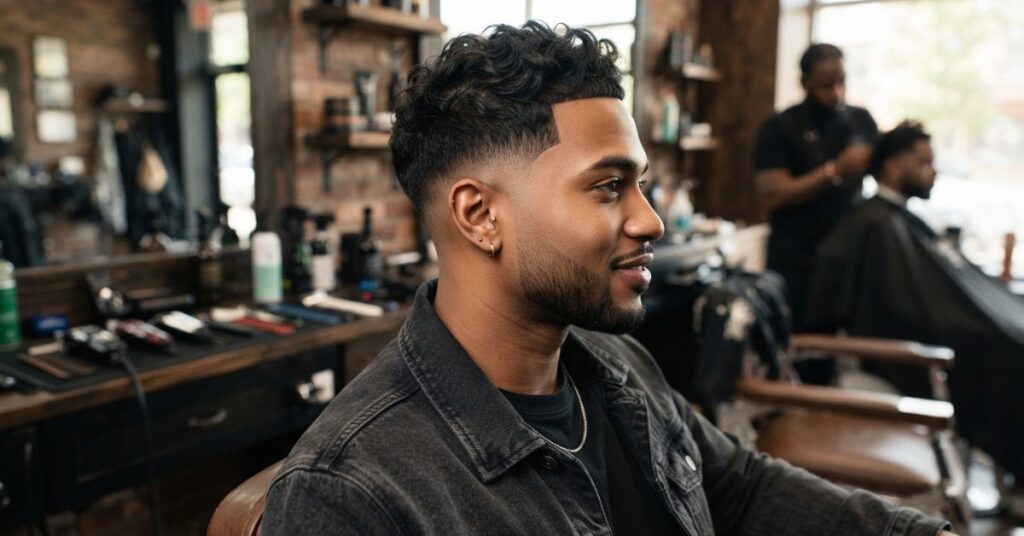
A low taper fade black men is one of the cleanest, most flexible cuts you can ask for. It keeps the sides neat, frames your hairline, and leaves your natural texture on top. It also works at the office, the gym, and a wedding.
But the name covers a lot of ground. A fade can be soft or sharp, with waves or an afro on top. This guide explains the options, which face shapes they suit, how texture changes the result, and what to say so you leave happy.
Preview a clean taper-style cut on your photo
Before you sit in the chair, see the cut on your own face. Many hairstyle preview apps and virtual try-on tools let you upload a photo and test different taper fade heights, hairlines, and top lengths.
Here is how to get the most from a preview:
- Use a front-facing photo in daylight, with your hair pulled back from your forehead.
- Try a low taper, then a mid taper, and compare how your face looks.
- Test the top at two lengths, such as a short crop and a fuller shape.
- Save the best two previews to show your barber.
A preview is a guide, not a promise. Your hair density and growth pattern decide the final result, so treat it as a conversation starter.
Key Takeaways
- A low taper fade starts just above the ear and at the nape, so most of the side hair stays.
- It is subtle, professional, and easy to grow out.
- It fits most face shapes when the top is shaped to match.
- It works on 4C coils, loose curls, and waves.
- A low skin fade is sharper and needs more frequent touch-ups.
- Clear instructions matter more than the haircut’s name.
- Plan a refresh every 2 to 4 weeks.
What Is a Low Taper Fade black Men?
A low taper fade is a haircut where the hair on the sides and back gets gradually shorter near the sideburns and neckline. The shortening begins low, around or just above the ear, and the top stays longer.
Two words are worth separating:
- Taper: a gradual reduction in length, usually around the sideburns and nape.
- Fade: a blend that shortens hair smoothly, often down to very short or skin.
Barbers use these terms differently, which causes confusion. A classic taper usually leaves a little hair at the shortest point. A fade can go lower, sometimes to bare skin. A low taper fade combines the two: a soft blend that starts low and finishes close, without a harsh contrast.
For Black men, this matters because coily hair holds shape well. A taper shows clean lines without cutting away too much density.
Which Low Taper Fade Should You Choose?
The right version depends on your top texture, your hairline, and how much upkeep you want.
Low Taper Fade with Waves
This is a favorite for good reason. The low start leaves more side hair, which supports 360 waves and keeps the pattern connected. You will need a brush and a consistent routine.
Low Taper Fade with a Textured Top
Short curls or coils on top, with a clean taper below. It looks natural and takes about two minutes to style.
Low Taper Fade with an Afro
A shaped afro on top with a tidy taper at the sides and neckline. The taper adds structure so the volume looks intentional.
Low Taper Fade with a Line Up
A line up sharpens the forehead, temples, and sideburns. It adds contrast and polish. Ask for a natural line if you prefer a softer look.
Low Taper Skin Fade
The taper blends down to bare skin at the very bottom. It is sharper and more dramatic, but it grows out faster.
| Style | Look | Upkeep | Best for |
|---|---|---|---|
| Low taper fade | Soft, classic | Every 3 to 4 weeks | Work, daily wear |
| Low skin fade | Sharp, high contrast | Every 2 to 3 weeks | Bold style, waves |
| Low taper with line up | Crisp edges | Every 2 to 3 weeks | Clean hairline lovers |
| Low taper with afro | Full, shaped | Every 3 to 4 weeks | Natural hair fans |
Face Shape Fit
Face shape is about balance. The taper controls the width at the sides, and the top controls height. Use these as starting points, not strict rules.
- Oval: Most versions work. Keep the top moderate.
- Round: Add height on top and keep the sides tight. A low taper with a short, lifted top lengthens the face.
- Square: A taper softens a strong jaw. A rounded top shape adds balance.
- Oblong: Avoid too much height. A fuller, flatter top keeps proportions even.
- Heart: A low taper keeps the sides from looking too narrow near the chin, and a medium top balances a wider forehead.
- Diamond: Keep some fullness at the sides and a textured top to soften the cheekbones.
A good barber looks at your head shape too. Flat spots, a high crown, or a strong nape all change where the taper should sit.
Hair Texture Notes
Texture decides how your fade looks once the clippers stop.
4C and tightly coiled hair
- Holds a crisp line and clear shape.
- Shrinkage hides length, so ask your barber to cut it slightly damp or stretched so the top is even.
- A moisturizing leave-in keeps coils from looking dry against the short sides.
3C and looser curls
- Curls show clearly against a low taper.
- A twist sponge or curl cream defines the pattern.
- Avoid heavy gel, which can flatten curls.
Waves
- The low start protects the pattern.
- Brush daily and wear a durag at night.
- Keep the top short enough that waves stay readable.
Sensitive skin
- Close fades and skin fades can cause razor bumps on some men.
- Ask for a guard or a light blend near the neckline if you break out.
- Use a warm towel before the cut and an alcohol-free aftershave.
What to Tell Your Barber
Clear words prevent bad cuts. Use this simple script:
- Name the cut: “A low taper fade.”
- Say where it starts: “Start just above the ear and at the nape.”
- State the finish: “Taper to a short guard, not to skin.” Or “Blend to skin at the bottom.”
- Describe the top: “Keep about an inch on top” or “just a light shape up.”
- Choose the edges: “Natural line up” or “sharp line up,” plus whether to clean the beard.
- Show a photo: Bring your preview and one real photo from the side.
Then ask the barber one question: “Does this suit my hairline and head shape?” A good barber will adjust and explain why.
If you are new to a shop, look for someone who regularly cuts coily and curly hair. Check their recent work on social media before you book.
Common Mistakes
Avoid these and your fade will look better and last longer.
- Starting too high. If the blend climbs past the temple, it is a mid fade, not a low one.
- Skipping the reference photo. Words like “short on the sides” mean different things to different barbers.
- Cutting a natural hairline too aggressively. Pushing a line up too far back makes the forehead look larger and can thin the edges over time.
- Ignoring skin care. Close clipper work without moisturizer leads to dryness and bumps.
- Waiting too long between cuts. A taper loses shape fast, and a low skin fade shows growth sooner.
- Choosing a cut for the photo, not your head. A style that suits one face may not suit yours.
- Forgetting the top. A sharp fade with a dry, uneven top looks unfinished.
How to Preview the Cut Before You Commit
A short routine can save you a bad haircut.
- Upload a clear, well-lit photo to a hairstyle preview tool.
- Compare a low taper fade, a low skin fade, and a mid taper.
- Check the hairline. Notice if the line up looks natural on you.
- Try two top lengths. Choose the one you can style in minutes.
- Take screenshots of the angles you like.
- Show your barber and ask what needs to change for your hair type.
Keep your expectations realistic. A preview can’t show how your hair density, cowlicks, or growth direction will behave.
FAQ
Is a low taper fade good for Black men?
Yes. It suits coily, curly, and wavy textures, keeps a clean shape, and works in professional and casual settings.
How often should I refresh a low taper fade?
Every 2 to 4 weeks. Go closer to 2 weeks if you wear a line up or want a sharp look.
Should I get a low taper or low skin fade?
Choose a low taper for a softer, easier look. Choose a low skin fade for stronger contrast if you don’t mind more frequent touch-ups.
Does a low taper fade work with waves?
Yes. The low start leaves side hair that supports your wave pattern, and a brush routine keeps the top defined.
What should I show my barber?
Bring one front photo and one side photo of the cut you want, plus a preview on your own face if you have one.
Summary
A low taper fade gives you a clean, balanced look that works with your natural texture instead of fighting it. Pick the version that fits your top style, whether that is waves, coils, or an afro. Match the shape to your face, protect your skin, and plan a refresh every few weeks.
The best results come from clear communication. Preview the cut, bring photos, and use the barber script above. Do that, and you will walk out with a fade that looks good now and grows out well.
SEO Research Notes
Honest note: The pages that surfaced for this topic were mostly thin, templated, or auto-generated sites, and I couldn’t verify 10 reputable barber or grooming blogs. The patterns below are still clear and useful.
Structure and style of ranking pages
- Pattern: “What is it?”, “Why it suits Black men”, “Variations”, “How to style”, “Maintenance”, “Barber tips”.
- Short, generic paragraphs. Many lean on celebrity name lists and “statement” language.
- Heading style: mostly question-based H2s and H3s, with some bullet lists and one comparison table.
Gaps and weak spots found
- Taper vs. fade vs. skin fade is explained inconsistently across pages.
- No real “what to say to your barber” script with guard numbers or placement.
- Almost no coverage of skin tone, razor bumps, or the line up and hairline.
- Face shape advice is vague, with little explanation of why it works.
- Little on 4C vs. 3C texture, waves, or the natural hair on top.
- Touch-up timing ranges from 2 to 4 weeks with no reasoning.
- No pre-cut preview step, which is a clear opening.
LSI/NLP terms used naturally: taper fade, skin fade, drop fade, line up, edge up, hairline, temple, sideburns, nape, neckline, guard, clipper, 360 waves, 4C, coily, curl pattern, afro, twist sponge, razor bumps, barber consultation, reference photo.
GEO/AI Overview tactics applied: direct definitions in the first line of sections, numbered steps, a comparison table, and one-to-two-line FAQ answers.

