

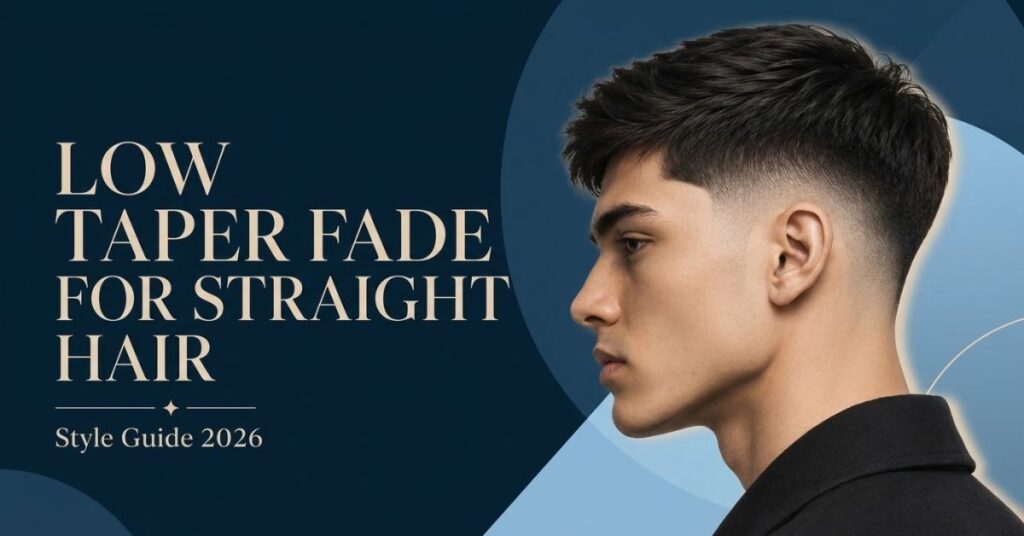
A low taper fade haircut for straight hair keeps the sides short and clean around the ears and neckline while the top stays full. Straight strands lie flat, so the blend looks sharp and every detail shows. It works for school, the office and weekends, and it needs a trim every 3 to 4 weeks.
This guide covers what the cut is, how it differs from a low fade and a plain taper, and what to say to your barber. It also covers top styles, guard sizes, products and upkeep.
The quick version
- The sides and back shorten gradually near the ears, sideburns and neckline.
- The top stays longer, so you can part it, push it forward or sweep it back.
- Straight hair shows every step of the blend, so clean clipper work matters.
- Book a barber visit every 3 to 4 weeks.
What is a low taper fade?
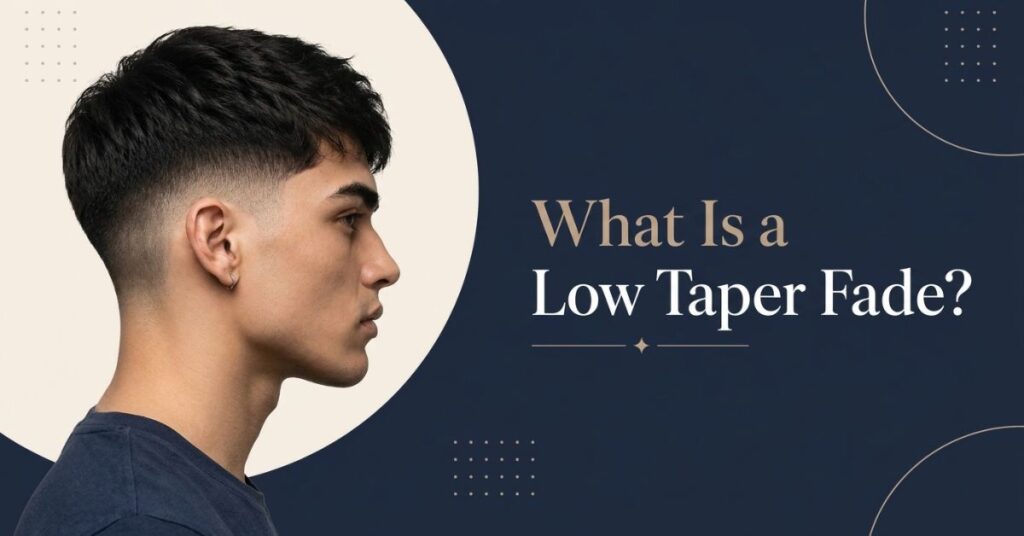
A low taper fade is a clipper cut where the hair shortens gradually along the sideburns, around the ears and across the neckline. The word “low” means the blending stays near the bottom of the head instead of climbing toward the temples or crown.
A barber builds the blend with clippers, guards and a comb. The hair higher on the sides keeps its length, then steps down in small stages. It reads as a soft shadow, not a hard line.
Two ideas sit inside the name:
- Taper: the length reduces gradually and some hair remains at the shortest point.
- Fade: the length blends down toward the skin.
A low taper fade borrows from both. The shortest area is usually a 0.5 or 1 guard, which is about 1.5 to 3 mm. That keeps the cut neat without looking shaved.
Why straight hair suits this cut
Straight hair makes the result easy to read. Each step of the blend lies flat against the head, so no curl or wave hides the transition. That is the upside and the risk.
What works in your favor
- Clean definition. The gradient looks crisp from the side and the back.
- Predictable styling. Straight hair takes most products well, so switching looks is simple.
- Low contrast. The sides look neat without the bold look of a skin fade.
What to watch
- Fine straight hair can fall flat on top. Ask for light texturizing or point cutting.
- Rough blending shows more on straight hair, so pick a barber with careful clipper work.
- Very thick straight hair may need thinning at the sides so it sits close to the head.
Low taper fade vs low fade vs taper
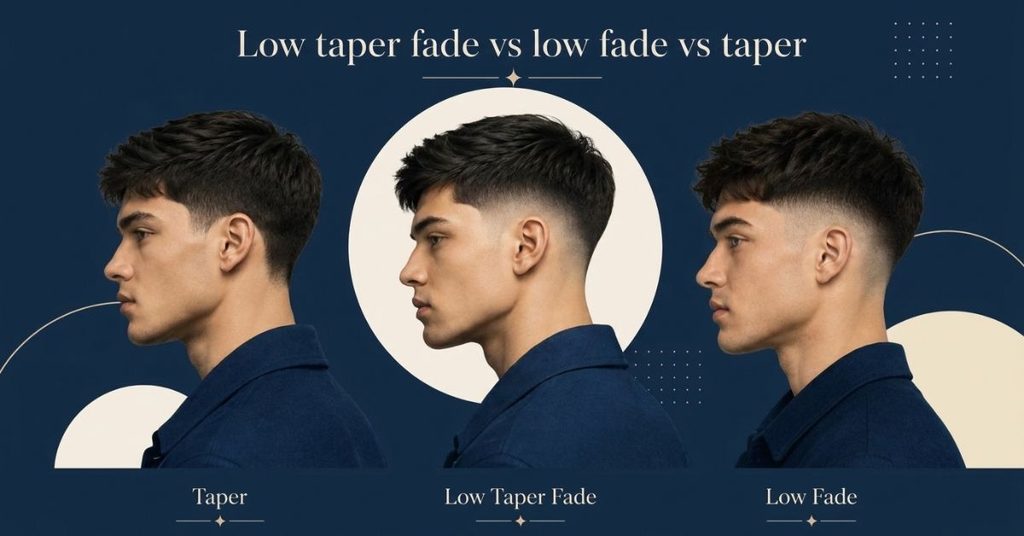
Barbers do not always use these terms the same way. One shop’s low fade is another’s taper, so describe the result you want, not just the name.
| Cut | Where it sits | Shortest length | Feel |
|---|---|---|---|
| Taper | Sideburns and nape | Some hair remains | Softest, most conservative |
| Low fade | Just above the ear and neckline | Often close to skin | Sharper, higher contrast |
| Low taper fade | Just above the ear and neckline | About 0.5 to 1 guard | Soft but defined |
A simple way to remember it:
- Taper describes how gradual the change is.
- Fade describes how close to skin it goes.
- Low describes where the blend starts.
If you want more contrast, ask about a mid taper fade, which starts higher on the side of the head. A high taper fade starts higher still and looks bolder. If you want the line to curve behind the ear, ask for a drop fade version.
Best top styles for straight hair in 2026
The sides stay the same. The top sets the personality of the cut.
Classic natural top
Short to medium length, combed with little product. Tidy, easy and suitable almost anywhere.
Textured fringe
Cut slightly forward and separated with matte clay. It looks relaxed but intentional.
Side part
A clean part with a comb finish. It suits offices, interviews and formal events.
Middle part
Medium length, split down the center and worn loose. It needs enough length to fall evenly on both sides.
Quiff or brush up
Hair lifted at the front. Thicker straight hair holds this shape best.
Short crop or French crop
Short, flat and styled forward. It is the lowest effort option for school or busy mornings.
Slick back
Best on medium to long tops. Use a water based pomade for a clean, brushed back finish.
Best face shapes and hair types
Face shape guides the top. Hair type guides the cut and the product.
By face shape
- Oval: most tops work, so experiment freely.
- Round: add height with a quiff or brush up to avoid extra width.
- Square: soft styles such as a textured fringe or loose side part balance a strong jaw.
- Long: keep moderate length and avoid too much height.
By hair type
- Fine straight hair: keep some length and ask for internal texture.
- Medium hair: the easiest to style and the most flexible.
- Thick straight hair: may need thinning at the sides so it does not puff out.
- Thinning or receding hairline: keep the top slightly longer and skip a very sharp, high contrast blend, which can draw attention to the temples.
Mention your density and any cowlicks or crown swirls at the start. They change how the top should be cut.
How to ask your barber for a clean low taper fade
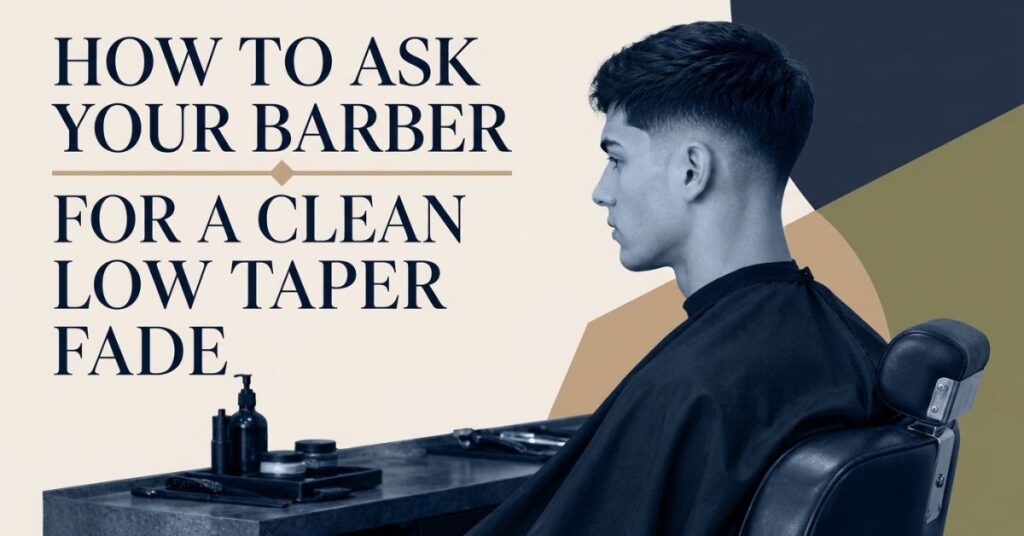
Clear words save you from a cut that sits too high or too short.
- Name the cut: “Low taper fade.”
- State the height: “Keep it low around the ears and neckline.”
- Give the shortest length: “Stop at a 1 guard, no skin,” or “Go down to skin” if you prefer.
- Give the top length in inches: “Two to three inches on top.”
- Pick the neckline: blunt, rounded or tapered.
- Mention your hair: “My hair is straight and tends to sit flat.”
- Bring a reference photo.
A line you can use:
“I’d like a low taper fade, kept low around the ears and neckline, with a soft blend. Leave two to three inches on top with some texture so it doesn’t sit flat.”
Neckline options
- Blunt: a straight, squared line. It looks sharp but grows out quickly.
- Rounded: softer and more forgiving.
- Tapered: fades into the neck with no hard edge. It grows out the most gracefully.
If you wear a beard, ask the barber to step the sideburns down so the hair and beard meet at a similar length.
Short, medium, and long variations
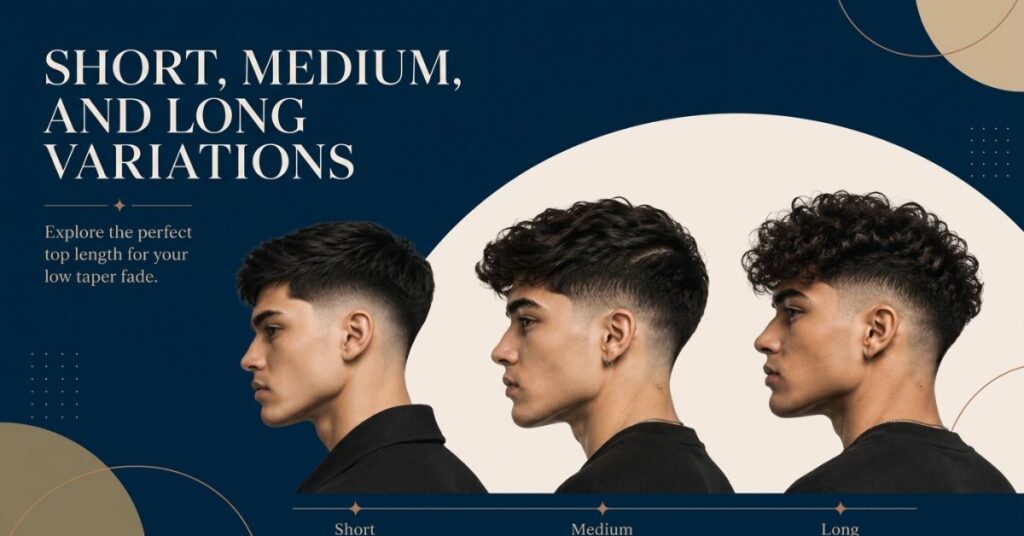
Short (about 1 to 2 inches on top)
Fast to style and good for strict dress codes. The trade-off is less styling range.
Medium (about 2 to 4 inches)
The most versatile length. It allows a part, a fringe, a quiff or a natural look.
Long (4 inches or more)
Better for middle parts, curtains and slick backs. It needs more product and time each morning.
For school or a conservative workplace, go short to medium. For a more expressive look, go medium to long.
Common US clipper guard sizes
- 0.5 = about 1.5 mm
- 1 = about 3 mm
- 2 = about 6 mm
- 3 = about 10 mm
Guard names vary by brand, so confirm the length in millimeters if you are unsure.
How to style it
Straight hair dries quickly and holds product well, which keeps styling simple.
- Start with slightly damp hair. Towel dry, or lightly mist dry hair.
- Add volume if needed. Blow dry on medium heat and lift the roots with your fingers or a round brush.
- Warm a small amount of product between your palms. Start with less than you think you need.
- Work it through. Use your fingers for a textured look, or a comb for a polished one.
- Set the shape. Push the front forward, back or to the side, then check the side view in the mirror.
Quick style ideas
- Casual: finger texture and matte clay.
- Work: a combed side part with water based pomade.
- Going out: lift the front with a firm hold paste.
Best products for straight hair
Match the product to your hair thickness and the finish you want.
- Matte clay: medium hold with a natural finish. The safest choice for most people.
- Texture powder: adds lift at the roots for fine or flat hair.
- Sea salt spray: gives a slightly undone look. It can look stringy on very fine hair.
- Water based pomade: gives definition and some shine, and washes out easily.
- Styling cream: light and soft. It suits thicker hair and a natural finish.
Avoid heavy waxes and oil based pomades. They weigh straight hair down and look greasy by midday.
How to maintain it at home
A low taper fade looks best in the first two weeks after a cut. A few habits stretch that window.
- See your barber every 3 to 4 weeks. The sides and neckline grow faster than the top. Some guides suggest 6 to 8 weeks, but by then the blend has usually softened into a grown out shape.
- Touch up only the neckline. A small trimmer works, but do not try to re-blend the fade yourself. Uneven patches are the usual result.
- Wash every 2 to 3 days. Daily washing strips natural oils and can make fine hair look flat.
- Condition the ends, not the roots.
- Use a clarifying shampoo weekly if you use product often.
Growth-out timeline
- Weeks 1 to 2: sharpest.
- Weeks 3 to 4: the blend softens and the neckline gets fuzzy.
- Weeks 5 to 6: the fade is mostly gone and the shape looks heavier.
Common mistakes to avoid
- Letting the fade climb too high. It should stay near the ears and neckline.
- Leaving the top flat. Ask for texture or light graduation.
- Using too much product. It adds grease, not hold.
- Describing length vaguely. “Not too short” means different things to different barbers.
- Ignoring face shape. A tall quiff on a long face can elongate it further.
- Waiting too long between trims.
- Fixing the fade at home. Touch up the neckline only.
FAQs about the low taper fade for straight hair
Is a low taper fade good for straight hair?
Yes. Straight hair lies flat, so the blend looks clean and defined, especially with some texture on top.
How long does a low taper fade last?
It looks best for 2 to 3 weeks and starts to lose shape around weeks 4 to 5.
What should I tell my barber for a low taper fade?
Ask for a low taper fade kept low around the ears and neckline with a soft blend, and state your top length and shortest guard.
Is a low taper fade better than a low fade for straight hair?
Choose the taper for a softer, safer look, and the low fade for more contrast if you can keep up with frequent trims.
Can I get a low taper fade with thin or receding straight hair?
Yes. Keep some length on top, ask for texture, and avoid a very sharp, high contrast blend.
What is the difference between a taper fade and a low taper fade?
A taper fade can start at any height, while a low taper fade keeps the blend near the ears and neckline.
How often should I get a low taper fade trimmed?
Every 3 to 4 weeks keeps the fade and neckline sharp.
Conclusion
The low taper fade is a practical cut for straight hair. It looks neat, works with many top styles, and asks very little of you in the morning.
Get two things right. Pick a top that suits your face shape and hair thickness, and tell your barber exactly what you want, ideally with a photo. Then keep to a 3 to 4 week schedule.

