


Ask ten barbers what the most requested cut of the year is, and most of them will say the same thing: the low taper fade. It shows up on business executives, college students, and toddlers getting their first real haircut, and it works because it never tries too hard.
This guide breaks down what a low taper fade actually is, how it differs from similar cuts, which version suits your hair type and face shape, and exactly what to say when you sit in the chair. By the end, you will know enough to walk into any barbershop and get the cut you actually pictured, not a rough approximation of it.
What is a low taper fade haircut?

A low taper fade is a haircut where the hair gradually shortens down the sides and back of the head, with the fade beginning low, close to the ears and the natural hairline, rather than higher up near the temples.
The barber typically starts with clippers set to a longer guard, often a number 2 or 3, then works down through shorter settings until the hair blends into skin or near-skin around the neckline. The top is left untouched by the fade, so it can be any length you like, from a short crop to several inches of texture.
Because the transition line sits so low on the head, most of your natural hair length stays intact. That is the main reason people describe this cut as subtle. There is contrast between the top and the sides, but it never reads as dramatic the way a high or skin fade does.
A few defining traits of the cut:
- The fade line starts above the ears and along the neckline, not at the temples.
- It blends gradually rather than creating a hard visual break.
- It works with almost any length or texture on top.
- It grows out more gracefully than higher fades, since there is less short hair to maintain.
Low taper fade vs low fade: what’s the difference?
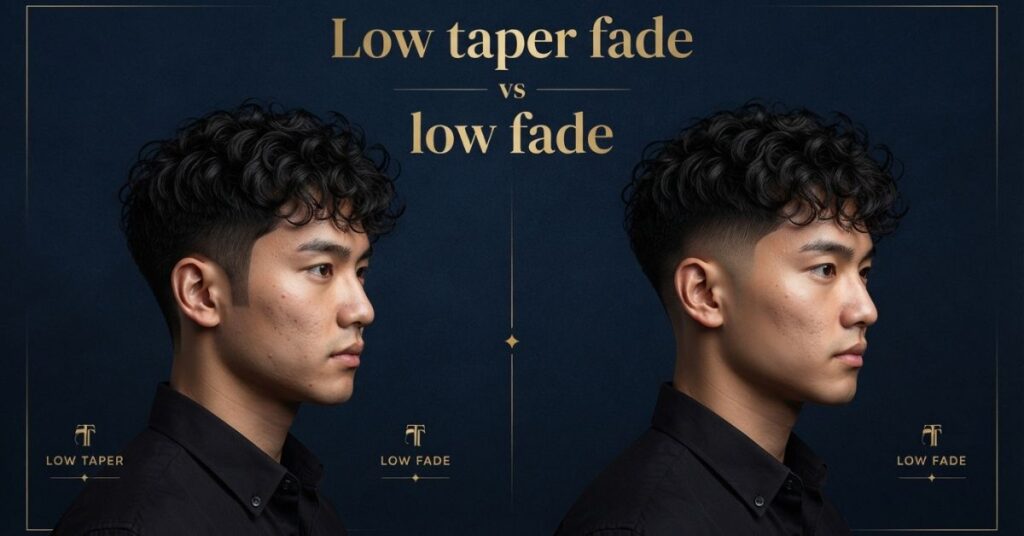
This is one of the most searched questions on the topic, and the honest answer is that the two terms overlap more than people expect.
A low fade simply means the fade starts low on the head. A low taper fade specifies how that fade behaves: it tapers, meaning the length change is gradual and blended rather than a sharp, defined line. In practice, every low taper fade is a type of low fade, but not every low fade is tapered the way a taper specifically implies.
Here is a simple way to think about it:
| Feature | Low Taper Fade | Low Fade (general) |
|---|---|---|
| Where it starts | Just above the ears and neckline | Just above the ears and neckline |
| Transition style | Soft, gradual blend | Can be gradual or sharper |
| Contrast level | Subtle | Varies, sometimes more defined |
| Best for | Professional, low-maintenance looks | Anyone wanting a low, clean fade |
If you want the softest possible version of a low fade, say “low taper fade” to your barber. If you are fine with a slightly crisper edge, “low fade” alone still gets you close, but the word “taper” is your insurance against a look that reads too aggressive.
Why low taper fade haircuts are so popular
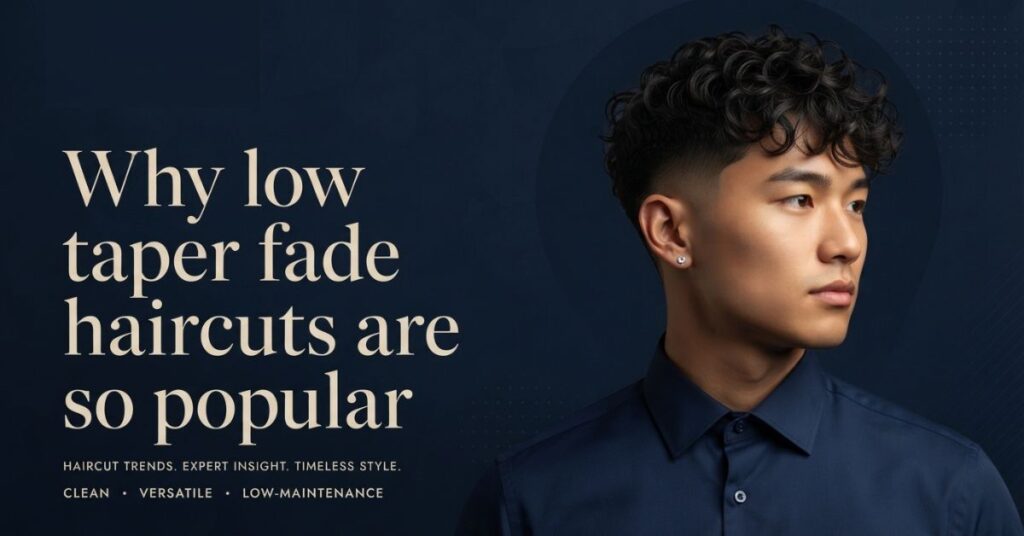
The low taper fade keeps landing on best-haircuts lists year after year, and the reasons are practical rather than trendy.
- It suits almost every setting. The subtle blend looks appropriate in an office, at a wedding, or on a weekend, without needing to change anything.
- It works with any hair type. Straight, wavy, curly, and coily hair all fade cleanly at a low height.
- It is a forgiving first fade. If you have never gone shorter on the sides before, the soft blend hides small barber inconsistencies far better than a high or skin fade would.
- It grows out slower. Because less hair is cut extremely short, you can usually stretch two to three weeks between trims instead of one.
- It pairs with facial hair naturally. The low fade line sits close to where a beard begins, so the two blend into each other with minimal extra shaping.
That mix of versatility and low upkeep is exactly why barbers steer undecided clients toward this cut more than almost any other.
Best low taper fade haircuts for men

The fade itself barely changes from one look to the next. What changes is the top, and that is where you get to express personal style. Some of the most requested variations include:
- Low taper fade with a crop top. Short, textured, brushed forward. Clean and low maintenance.
- Low taper fade with a comb over. Side part, slightly longer length, styled to one side for a polished, office-ready finish.
- Low taper fade with a slick back. Pomade or gel pushed straight back for a sharper, more formal look.
- Low taper fade with a textured fringe. Longer top left messy or piece-y, often paired with a hard part for contrast.
- Low taper fade with a mullet. Length kept at the back while the sides stay tapered, a trend that keeps growing among younger clients.
- Low taper fade with a hard part. A shaved line separating the fade from the top, adding definition without raising the fade height.
- Low taper fade with a beard. The fade blends directly into a well-shaped beard for a cohesive, grown-man look.
Bring a photo of whichever version appeals to you. Even a rough reference photo does more for communication than a detailed verbal description.
Low taper fade for curly hair

Curly hair and a low taper fade are a strong combination, mainly because the low fade line lets the curls keep their volume instead of competing with a high-contrast sideline.
A few things make this pairing work well:
- It is a strong match if you want your curls to read as deliberate rather than overgrown, or if you have dense curls and want to shed bulk around the ears without losing your curl pattern on top.
- A good barber usually cuts curly hair dry first, so they can see exactly how each curl falls before touching the sides. That step is what prevents the top from looking lopsided once the hair dries and settles.
- For products, a curl cream or a light mousse worked through damp hair keeps the curl pattern defined. A quick pass with a diffuser adds bounce without frizzing the edges the barber just cleaned up.
- Afros, twists, and locs all fade cleanly at a low height too. The lower fade line means less of the curl structure gets removed, which matters if you are trying to grow length on top while keeping the sides neat.
If you have coily hair, dreadlocs, or a full afro, ask your barber specifically about a low taper afro fade. It keeps the round, natural shape on top intact while still giving you a defined, groomed edge around the ears and neck.
Low taper fade for straight and wavy hair
Straight and wavy hair show the taper differently than curly hair does, mostly because the line of the fade is more visible against flat or gently textured strands.
For straight hair, the low taper fade can be expressive and sharp, particularly when paired with a spiked or textured finish. To get that look, apply a light styling gel to damp hair, comb it forward from the crown, then style the fringe up and slightly back. The result is a clean, deliberate texture that photographs well and holds through a full day.
Wavy hair benefits from a slightly different approach. Because waves already have natural movement, a sea salt spray or lightweight mousse worked through damp hair tends to enhance the pattern without weighing it down. Air drying or a light diffuser finish keeps the waves loose rather than forcing them flat.
In both cases, the low fade underneath does the same job: it removes bulk at the sides so the top’s natural movement, whether straight and sharp or wavy and loose, stands out instead of getting buried under thick hair on all sides.
How to style a textured or messy top
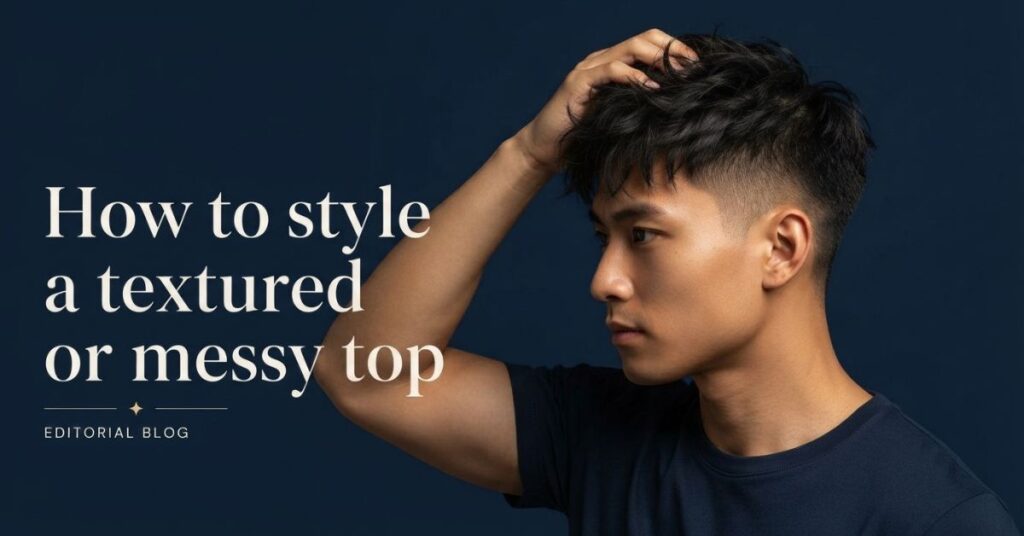
A textured or messy top is one of the most requested finishes with a low taper fade, and it is also one of the easiest to get wrong if the product or drying method is off.
Follow this general approach:
- Start with damp, not soaking wet hair. Excess water dilutes product and makes it harder to build texture.
- Apply a small amount of clay, paste, or matte wax. These hold texture without adding shine, which is what keeps the look feeling natural rather than slicked.
- Work the product through with your fingers, not a comb. Fingers separate strands unevenly on purpose, which is exactly what creates that lived-in texture.
- Pull pieces forward or upward at random. Avoid symmetrical styling. Uneven placement is what makes a messy top look intentional instead of unfinished.
- Finish with a light-hold spray if you need it to last. Skip this step if you like the freedom to restyle throughout the day.
The trick with a low taper fade specifically is that the clean, low sides give you permission to go messier on top. Because the fade stays subtle, a wilder texture on top never looks chaotic. It looks balanced.
How to ask your barber for a low taper fade

Miscommunication at the chair is the single biggest reason people leave with a fade they did not want. A few specific phrases and habits fix that almost every time.
- Say “low taper fade,” not just “fade.” The word “low” tells the barber exactly where to start the transition, above the ears and along the neckline, rather than higher up near the temple.
- Specify the guard number if you know it. Most low tapers start around a number 2 or 3 and blend down from there. If you are unsure, ask your barber to keep more length and you can always go shorter next visit.
- Bring a reference photo. A picture removes ambiguity about exactly how low the fade sits and how blended the transition should look.
- Describe the top separately from the fade. “Low taper fade with a textured crop” or “low taper fade with a comb over” tells the barber both pieces of the puzzle at once.
- Mention your face shape or past bad experiences if relevant. A good barber will adjust the height of the fade or the volume on top based on that information.
Think of the fade as the constant and the top as the variable. Once your barber understands both, the rest of the appointment is just execution.
How to style and maintain a low taper fade
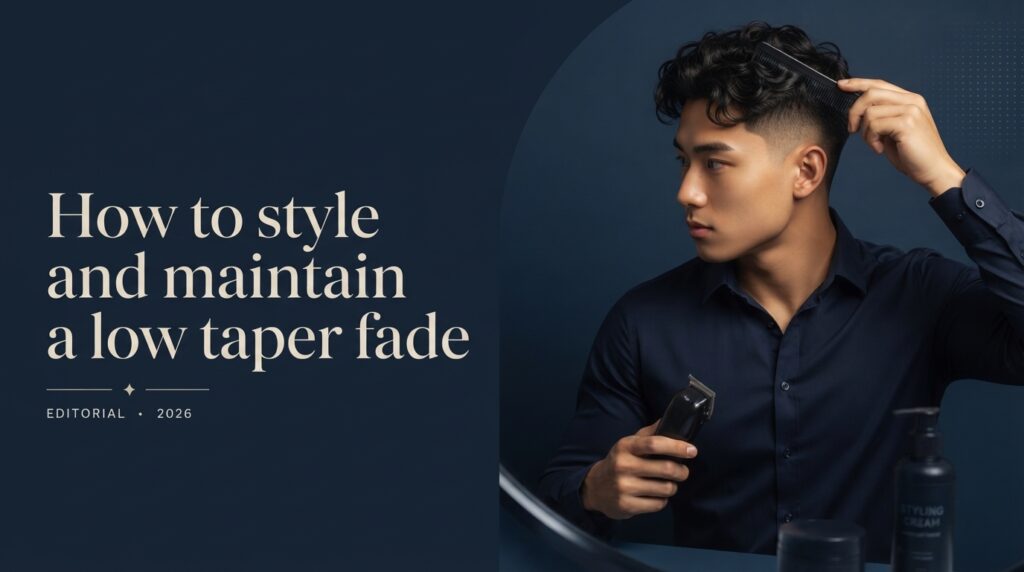
One reason this cut stays popular is that it does not demand much once you leave the barbershop. Still, a few habits keep it looking sharp between visits.
- Schedule trims every two to three weeks. Because the fade sits low, it grows out more gracefully than higher fades, but the sides will still soften and lose definition after about three weeks.
- Wash with a gentle, sulfate-free shampoo. Harsh shampoos strip natural oils from the scalp, which can cause it to overcompensate by producing excess oil, making a fresh fade look greasy within a day or two.
- Avoid heavy pomades on the sides. Thick, oil-based products can coat short hair and flatten the crisp look of the fade. Save heavier product for the top.
- Use a boar bristle brush for straight or wavy hair. Brushing redistributes natural oils and keeps the top looking healthy between washes.
- Moisturize curly or coily hair regularly. Short, faded sides can dry out fast, so a light daily moisturizer or leave-in cream helps prevent breakage around the taper line.
- Book your next trim before the current one grows out completely. Staying slightly ahead of the fade, rather than waiting until it fully disappears, keeps the shape consistent over time.
Does a low taper fade suit your face shape?

Almost every face shape can wear a low taper fade, which is part of why it is such a widely recommended cut. That said, small adjustments to the top length and fade height make a real difference.
- Oval faces. The most flexible shape for this cut. Nearly every version of the low taper fade, from short crops to longer textured tops, looks balanced.
- Round faces. Ask for more height and volume on top. This adds visual length to the face, while keeping the sides tight prevents extra width.
- Square faces. A low taper fade naturally softens strong, angular jawlines. Keep the transition gradual rather than sharp for the most flattering result.
- Long faces. Slightly more volume on the sides, rather than height on top, helps add width and keeps the face from looking stretched.
- Heart-shaped faces. A little extra volume on top balances a narrower chin and jawline, while the low fade keeps the sides from adding bulk near the temples.
- Diamond faces. Most low taper variations work well here, since the cut naturally complements strong cheekbones without over-emphasizing them.
A skilled barber will usually glance at your face shape before even picking up the clippers, but it is worth mentioning it yourself, especially if you have felt like a specific style did not suit you in the past.
The bottom line
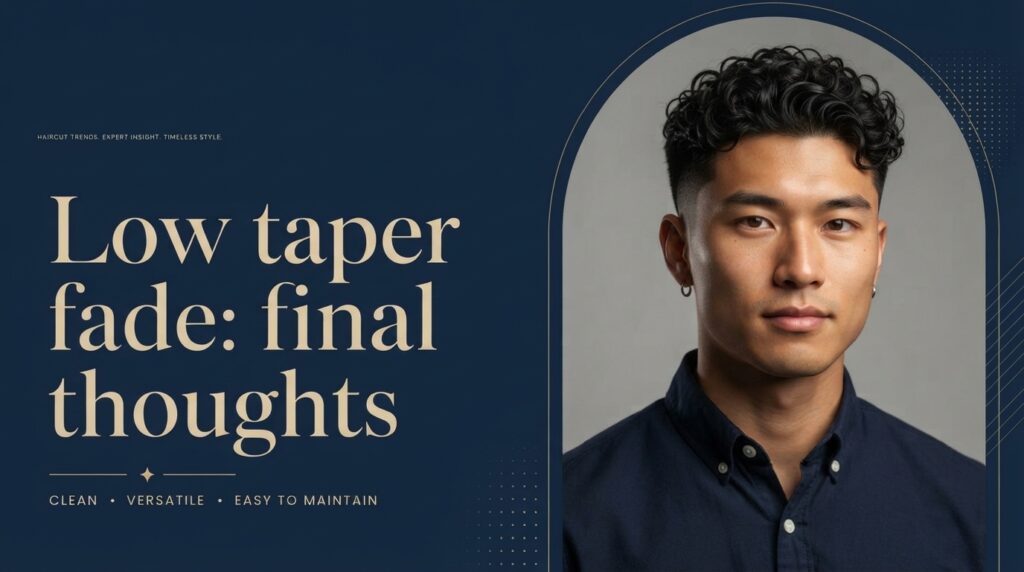
The low taper fade earns its popularity honestly. It flatters nearly every face shape, works with every hair type from straight to coily, and asks for less upkeep than most fades that sit higher on the head. Whether you want a clean office-ready comb over, a wild textured top, or something in between, the low fade underneath gives you room to change your mind without committing to a dramatic new haircut every time.
If you are due for a trim, use this guide as your reference. Bring a photo, say “low taper fade,” describe what you want on top, and let the blend do the rest.
Go deeper: low taper fade guides
- Low taper fade for Black men: curly and coily hair styles, guard lengths, and beard pairings
- Low taper fade afro guide: shapes, upkeep, and barber talk for natural hair
- Low taper fade vs mid and high fade: choosing the right contrast level for your style
- Low taper fade with beard: blending guides for different beard lengths
Read More : Mid taper fade buzz cut: styles, guard lengths, and barber guide
FAQs about low taper fade haircuts
How low does a low taper fade start?
It typically starts just above the ears and along the natural neckline, rather than higher up near the temples like a mid or high fade.
Does a low taper fade suit curly hair?
Yes. The lower fade line preserves more of your curl pattern on top while still removing bulk around the ears and neck.
How often do I need to get a low taper fade trimmed?
Most people get it trimmed every two to three weeks, though the soft blend allows it to grow out more gracefully than higher fades.
Is a low taper fade the same as a low fade?
Not exactly. Every low taper fade is a type of low fade, but the word “taper” specifically asks for a soft, gradual blend rather than a sharper transition.
Can I get a low taper fade with long hair on top?
Yes. The fade only affects the sides and back, so the top can be any length, from a short crop to a longer, textured style.
Is a low taper fade professional enough for the office?
Yes. Its subtle blend and lack of dramatic contrast make it one of the most workplace-appropriate fade styles available.
What guard size is used for a low taper fade?
Most barbers start around a number 2 or 3 guard on top of the fade zone, then blend down to shorter settings near the skin.
Does a low taper fade work for every face shape?
Yes, with minor adjustments. Rounder faces benefit from more height on top, while square faces look softened by the gradual blend.

