

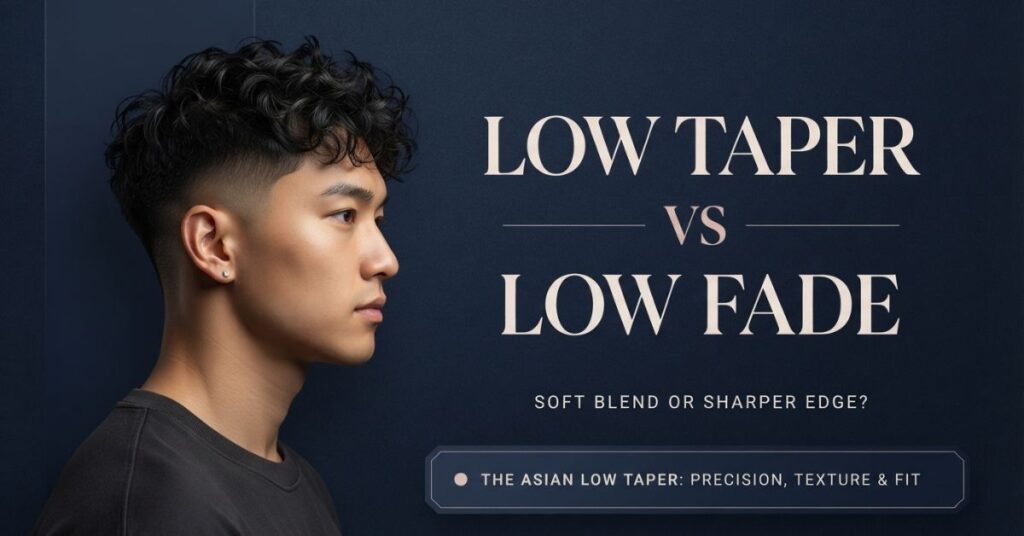
Sitting in the barber’s chair and unsure whether to ask for a low taper or a low fade? You’re not alone. These two cuts look almost identical in photos, start in roughly the same spot on the head, and get confused constantly, even by guys who’ve been getting haircuts for years.
The truth is, the difference comes down to technique, not location. A low taper and a low fade can both begin just above the ear, but how the hair shortens from that point makes them two very different styles with different maintenance schedules, different price points over a year, and different levels of boldness.
This guide breaks down exactly what separates the two, which one fits your face shape and hair type, and the precise wording to use with your barber so you walk out with the cut you actually pictured.
The main difference
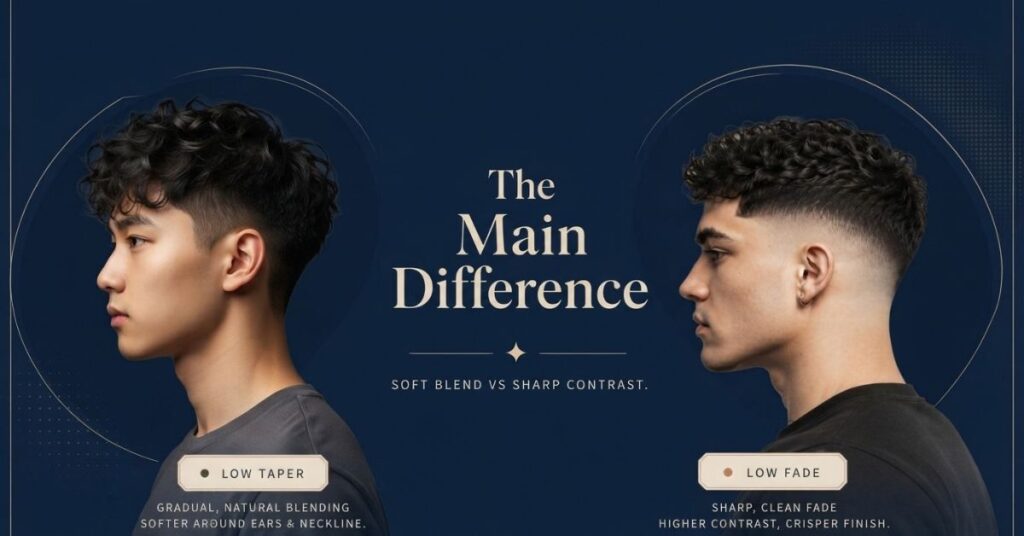
A low taper gradually shortens the hair with no hard stopping point, blending smoothly into the neckline and sideburns while still leaving visible length on the sides. A low fade does the opposite: it cuts down close to the skin near the hairline, creating a sharper, more defined contrast between the long hair on top and the short sides.
In short:
- Low taper = gradual, subtle, soft transition, more hair left on the sides
- Low fade = sharper contrast, closer to the skin, bolder finish
Both start low on the head, generally around the ear or just above it, which is why the two names get mixed up so often. But a taper never fully disappears into skin, while a fade usually does, even if only near the very bottom edge.
What is a low taper?
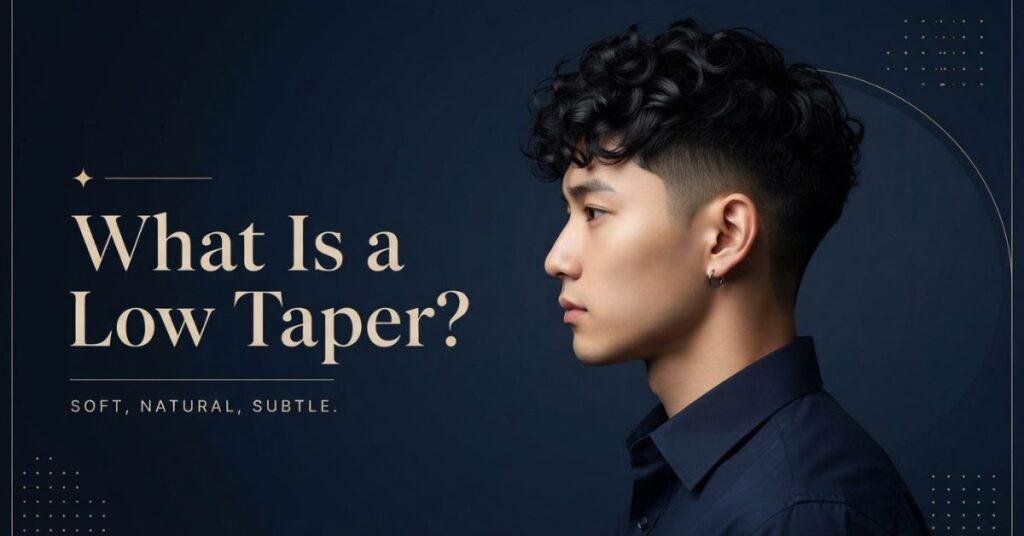
A low taper is a haircut where the hair length gradually decreases from the top of the head down toward the neckline and around the ears, without any harsh line or skin-close section. The shortest point sits low, typically at or just above the hairline, and the transition happens over a longer stretch of hair rather than a tight blend zone.
Key traits of a low taper:
- No hard edge or shaved section
- More hair retained overall, even at the shortest point
- A softer, more traditional silhouette
- Works well for guys who want a subtle change, not a dramatic one
Because it keeps more length throughout, a low taper tends to read as classic and professional. It’s the cut you’ll see in most corporate offices, law firms, and conservative workplaces, since it doesn’t draw much attention to itself. It also grows out gracefully, so you’re not stuck with an obvious “needs a cut” look after three weeks.
What is a low fade?
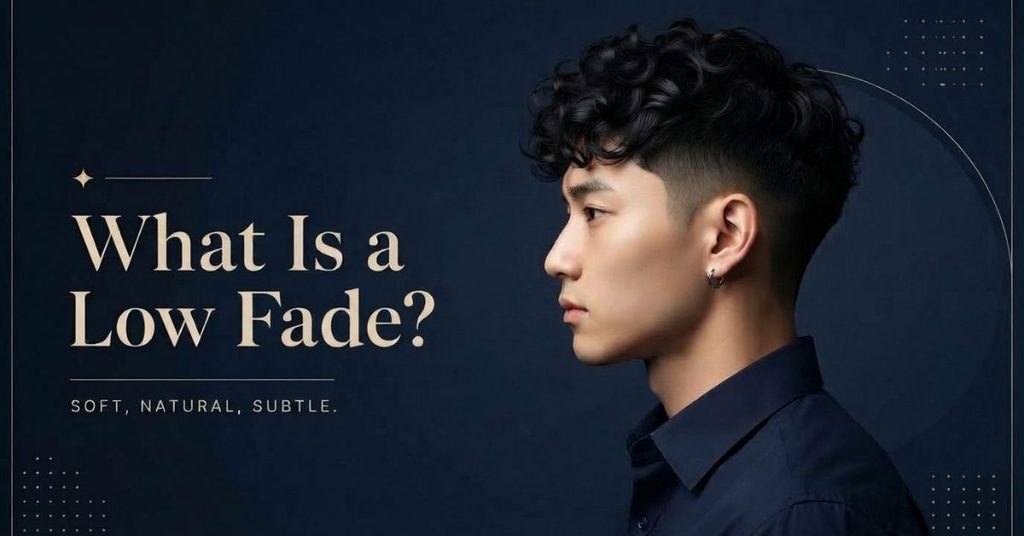
A low fade is a haircut where the hair transitions from long on top to very short, often down to the skin, in a tighter zone that starts just above the ear and around the neckline. Unlike a taper, a fade is built around contrast. The barber works in stages, blending guard lengths downward until the hair meets bare or near-bare skin at the bottom.
Key traits of a low fade:
- A defined gradient with visible contrast
- Can go down to skin (sometimes called a skin fade) or stop at a very short guard length
- Adds a sharper, more modern edge to the haircut
- Pairs well with textured or longer styles on top for contrast
Because the fade zone sits low, it’s considered one of the more workplace-friendly fade variations. It’s bolder than a taper but far more conservative than a mid or high fade, which climb up toward the temple or crown and create a much more noticeable look.
Read More : Mid Taper Fade Fluffy Fringe Hair: What It Is, Styles, and How to Ask for It
Low taper vs low fade at a glance
| Feature | Low Taper | Low Fade |
|---|---|---|
| Starting point | Just above the ear or neckline | Just above the ear or neckline |
| Transition style | Gradual, no hard line | Sharp, defined gradient |
| Shortest length | Short but not bare skin | Often down to skin |
| Visual contrast | Subtle | Bold |
| Maintenance frequency | Every 4 to 6 weeks | Every 2 to 4 weeks |
| Best for | Conservative, professional settings | Modern, fashion forward looks |
| Grows out | Gracefully, blends naturally | Needs more frequent upkeep |
Which one looks more natural, and where each works best
If your priority is a natural, understated look that doesn’t scream “fresh haircut,” the low taper wins. Its lack of a hard line means it blends with your natural hair growth pattern, so even a few weeks after a cut, it still looks intentional rather than grown out.
The low fade, on the other hand, is built to be noticed, just not dramatically. Because the contrast lives close to the hairline and stays low on the head, it reads as clean and sharp without becoming an attention-grabbing statement the way a high or mid fade does.
Where each one shines:
- Low taper: office jobs, client-facing roles, formal events, weddings, anyone who wants a cut that photographs well for years, not just this season
- Low fade: everyday modern styling, casual and creative workplaces, guys who want more definition without going full skin fade up the sides
Neither is objectively “better.” It genuinely depends on how much contrast you’re comfortable with and how often you’re willing to sit in a barber’s chair.
Choosing based on your face shape
Your face shape plays a real role in how flattering each cut will look, since the placement of contrast can visually widen, narrow, elongate, or soften your features.
Oval face
Both cuts work well here. Oval is considered the most balanced face shape, so you have flexibility to choose based on style preference rather than necessity.
Round face
A low fade tends to be more flattering since the added contrast near the hairline creates the illusion of more defined, angular features. A low taper is fine too, but it won’t add the same slimming effect.
Square face
A low taper often softens strong, angular jawlines because of its gradual blend. A low fade can also work, especially if you want to lean into the angularity rather than soften it.
Long face
Stick with a low taper or low fade over anything higher up the head. High fades stretch the face visually, while a low option keeps weight on the sides and helps balance the proportions.
Heart-shaped face
A low taper is usually the safer pick since it avoids drawing extra attention to a wider forehead, keeping the cut balanced from top to bottom.
Choosing based on your hair type
Hair texture changes how easily each cut can be executed, and it affects how long the style holds up between visits.
Straight hair
Both the low taper and low fade work cleanly with straight hair, since the lines are easy for a barber to define and the hair lies flat for a crisp finish either way.
Wavy hair
A low taper tends to blend more forgivingly with waves, since there’s no hard skin line to disrupt if the wave pattern shifts slightly day to day. A low fade still works but needs more precise upkeep to keep the line sharp.
Curly or coily hair
A low fade can actually look excellent on curly hair, since the contrast between the tight curls on top and the close sides creates a striking visual effect. A low taper is a solid, lower-maintenance alternative if you’d rather keep more length and less contrast.
Thick or coarse hair
A low fade helps reduce bulk on the sides, making thick hair easier to manage day to day. Some barbers will “de-bulk” the hair first to get a smoother fade line.
Fine or thinning hair
A low taper is generally more forgiving here, since a skin fade can sometimes expose more scalp than you’d like. The softer gradient of a taper hides thinning areas better.
Maintenance and how long each lasts
This is where the two cuts really diverge, and it’s worth thinking about before you commit.
A low taper typically holds its shape for 4 to 6 weeks before it needs a fresh cut. Because there’s no hard line to maintain, the grow-out period looks intentional rather than messy, which means you can stretch appointments further apart without anyone noticing.
A low fade usually needs a touch-up every 2 to 4 weeks. The closer the fade gets to skin, the faster it grows out and loses its crisp contrast, since even a small amount of regrowth softens the line. If you go for a true skin fade at the bottom, expect to be more diligent about booking regular appointments.
Over the course of a year, that difference adds up:
- Low taper: roughly 9 to 13 visits per year
- Low fade: roughly 13 to 20 visits per year
If budget or time is a factor, the low taper is the lower-commitment option. If you don’t mind more frequent trips and want that consistently sharp look, the low fade delivers a cleaner result more often.
Read More :Mid Taper Fade Edgar: Styles, Barber Guide & Maintenance
Pairing with popular styles on top
Both cuts are versatile bases that work with a wide range of styles up top.
Popular low taper pairings
- Classic side part
- Comb-over
- Slicked back style
- Textured crop
- Short, neat everyday cut
Popular low fade pairings
- Textured quiff
- Modern pompadour
- Curly or wavy top left natural
- Messy, textured crop
- Short spiky styles
If you want maximum contrast between the top and sides, a low fade paired with a longer, textured top creates the most dramatic effect. If you want a more uniform, understated look, a low taper with a shorter, neater top keeps everything cohesive.
How to ask your barber
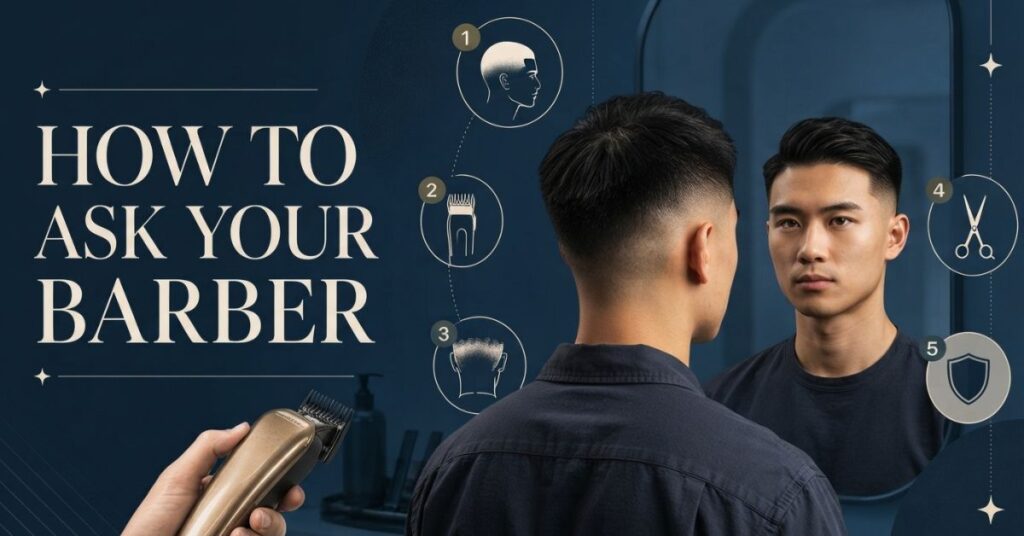
Vague requests are the number one reason people leave the chair disappointed. Use this wording to get exactly what you want:
- For a low taper: “I’d like a low taper, no hard line, blend it gradually into the neckline and sideburns, keep some length on the sides.”
- For a low fade: “I’d like a low fade, starting just above the ear, fading down toward skin at the bottom, with a clear contrast line.”
- Bring a reference photo. Even with the right words, a photo removes any ambiguity about how low the fade or taper should start and how much contrast you want.
- Mention your face shape or concerns. A good barber will adjust the cut slightly, for example softening a fade line for a round face or keeping more length on top for a heart-shaped face.
- Ask about maintenance before you commit. If you know you can’t get back in every two weeks, say so. Your barber can suggest a slightly less aggressive fade or a taper instead.
So, which should you choose?
If you want something classic, low maintenance, and safe for nearly any setting, go with the low taper. It’s forgiving as it grows out, works across almost every hair type, and won’t need constant upkeep to look sharp.
If you want a cut with more definition, a bit more edge, and don’t mind visiting the barber more often, the low fade is the better call. It delivers a cleaner, bolder look and pairs especially well with textured or curly hair on top.
There’s no wrong answer here. It genuinely comes down to how much contrast you want, how much time you’re willing to spend in the chair, and what fits your day-to-day lifestyle. When in doubt, start with a low taper, since it’s easier to go bolder later than to grow out a fade you’re not ready for.
Read More : Low Taper Fade With Design: Best Haircut Ideas, Styles, and Barber Tips for 2026
FAQs about low taper vs low fade
Is a low taper more professional than a low fade?
Generally yes. A low taper’s soft, gradual blend reads as more conservative, making it a safer choice for formal or corporate settings.
Can a low fade look natural, or is it always noticeable?
A low fade can look natural since the contrast stays low on the head, but it’s still more noticeable than a taper due to the closer-to-skin finish.
Which lasts longer between haircuts, a low taper or a low fade?
A low taper typically lasts 4 to 6 weeks, while a low fade needs a touch-up every 2 to 4 weeks to keep its sharp line.
Does a low taper work with curly hair?
Yes, a low taper is a forgiving, lower-maintenance option for curly hair, though a low fade can also look great by creating more contrast with the curls on top.
Which is better for a round face, a low taper or a low fade?
A low fade tends to be more flattering for round faces since the added contrast creates the illusion of sharper, more defined features.
Can I switch from a low fade to a low taper easily?
Yes, growing out a low fade into a low taper is straightforward since your barber can simply soften the existing line over one or two visits.
Is a low fade more expensive than a low taper over time?
It can be, since low fades typically require more frequent visits per year, which adds up in total cost even if the price per cut is similar.
Want more taper fade guides?
If you’re still narrowing down the right cut, it helps to see how the low taper and low fade compare to other popular variations, like the mid fade, high fade, and skin fade. Exploring those side by side will give you a fuller picture of exactly how much contrast and maintenance you’re signing up for before your next appointment.

