

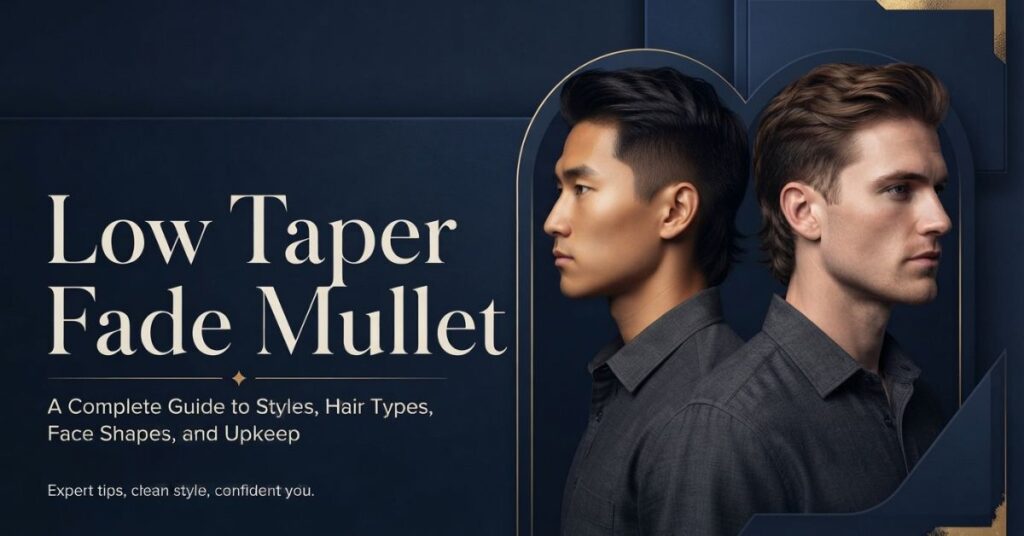
If you’ve spent any time scrolling barbershop reels lately, you’ve noticed the same haircut popping up again and again: short, clean sides that lead into a longer, layered back. That’s the low taper fade mullet, and it’s become one of the most requested men’s cuts of the past year.
The appeal is easy to understand. It keeps the front polished enough for work or school while letting the back do something more expressive. It also grows out far more gracefully than a skin fade, which means fewer emergency barber visits.
This guide breaks down exactly what the cut is, which variations exist, how it works with different hair types and face shapes, and how to keep it looking sharp between trims.
What is a low taper fade mullet?
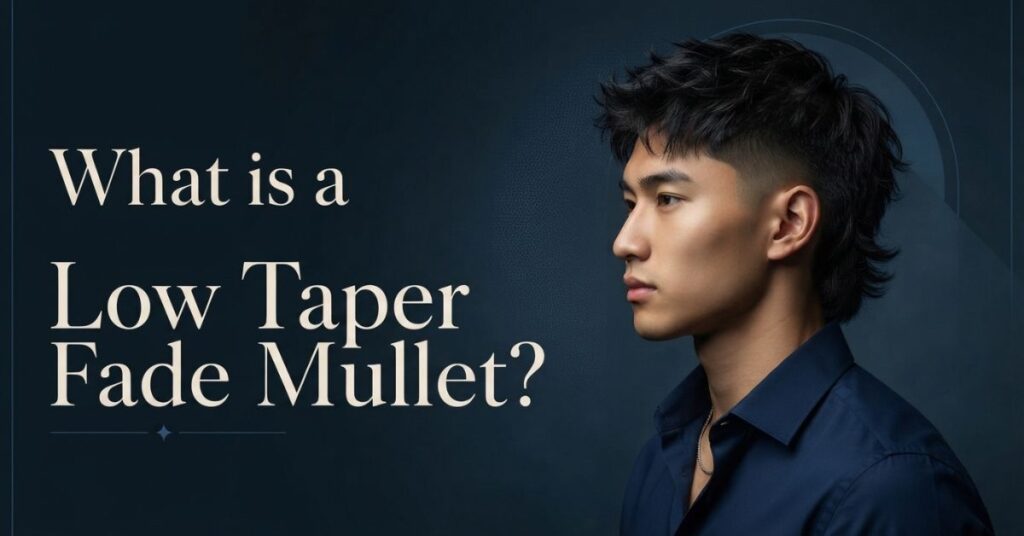
A low taper fade mullet combines two separate barbering techniques into a single haircut. The “low taper fade” refers to how the sides and back are cut: hair is trimmed very close near the hairline and neckline, then gradually lengthens as it moves up toward the crown. The word “low” simply tells the barber where that fade starts, close to the ear and nape rather than higher up the head.
The “mullet” part is what happens on top and at the back. Instead of blending everything into one uniform length, the back is left noticeably longer, creating the signature short-sides, long-back silhouette the mullet is known for.
Put together, the result is a cut that looks neat and controlled from the front, then reveals more personality and length once you turn around.
The features that define the cut
A few details separate a genuine low taper fade mullet from a generic long haircut or a plain fade:
- Low fade placement. The blend typically begins around one to two inches above the ear rather than higher on the scalp, so the contrast is subtle instead of dramatic.
- Gradual transition. There’s no harsh line between lengths. The hair fades smoothly from skin-short to longer strands over a short distance.
- Length retained at the back. The nape and crown area keep enough length to create movement, whether that’s a few inches or a true shoulder-grazing tail.
- Adjustable top length. The top can be worn short and textured or longer and swept back, which is part of why this cut suits so many face shapes and hair types.
- Slow, forgiving regrowth. Because the fade sits low, new growth near the hairline is far less noticeable than with a high or skin fade, so touch-ups can be stretched out.
Why choose a low taper fade mullet over other mullet styles?
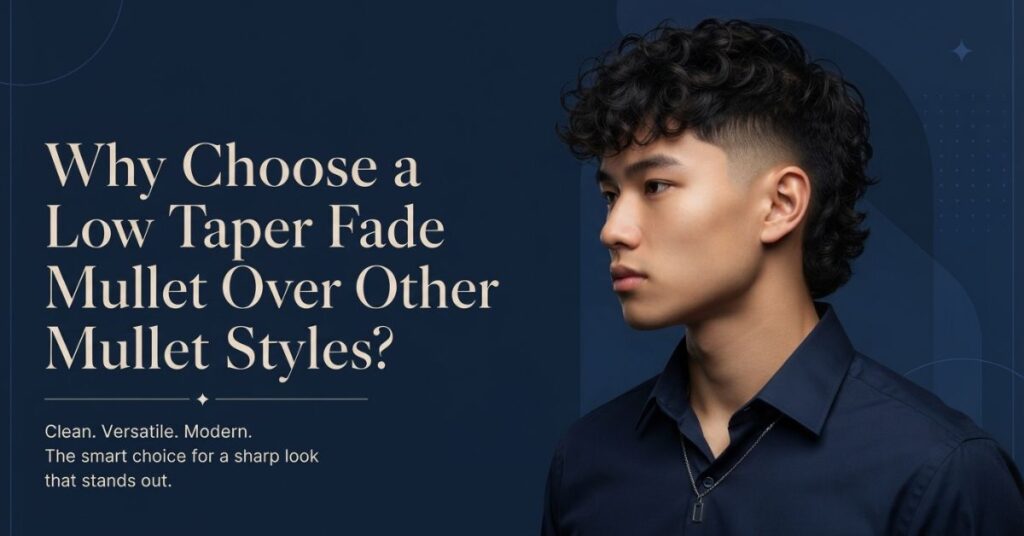
Mullets come in a lot of forms, from the exaggerated 1980s version to the high-contrast burst fade mullet that radiates sharply around the ear. So why does the low taper version keep winning out?
- It’s more workplace-friendly. The subtle fade reads as a normal, tidy haircut from the front, which matters if your job or school has a conservative dress code.
- It’s lower maintenance. Because the contrast between lengths is gentler, regrowth is far less obvious, so you can usually go four to six weeks between fade touch-ups instead of two to three.
- It suits more face shapes. A high or skin fade mullet can be unforgiving on rounder or shorter faces. A low taper softens that effect and adds balance instead of extra width.
- It’s easier to grow out or scale back. If you decide the mullet life isn’t for you, a low taper fade grows into a regular textured cut far more gracefully than a burst or skin fade does.
- It works across hair textures. Straight, wavy, curly, and coily hair all respond well to a gradual taper, whereas sharper fades can look harsh against tighter curl patterns.
In short, the low taper fade mullet gives you the personality of a mullet without demanding the daily commitment or boldness that louder versions require.
Best low taper fade mullet styles and variations
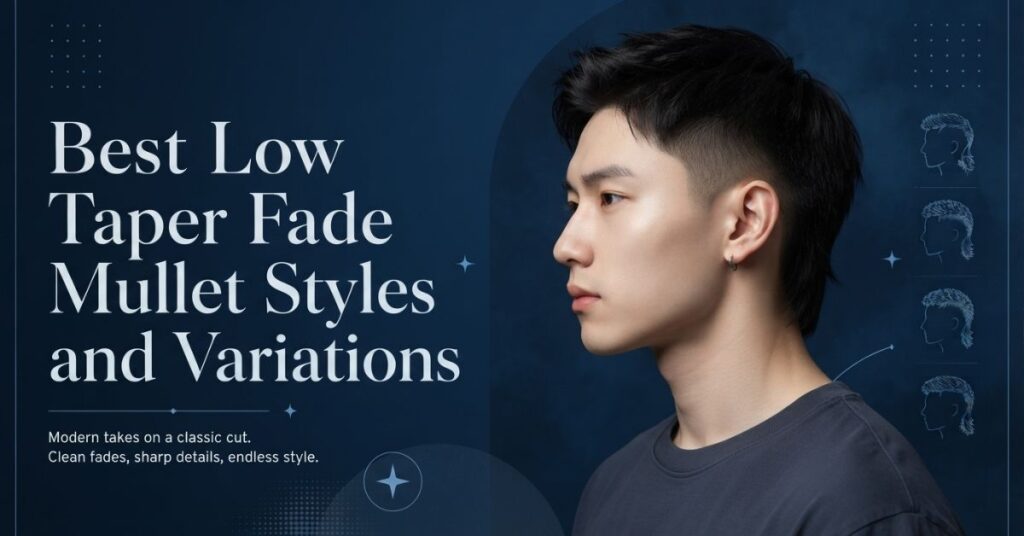
Once you’ve settled on the low taper base, there’s still a lot of room to make the cut your own. Here are five of the most requested variations right now.
The textured crop mullet
This version keeps the top short, around two to three inches, and cut into choppy, piece-y layers. The low fade handles the sides while the back stays just long enough to flick out. It’s a great entry point if you want mullet energy without a dramatic length commitment, and it styles in under a minute with a small amount of matte clay.
The curly mullet fade
Here the natural curl pattern is left mostly untouched on top and at the back, while the low fade keeps the sides controlled. Curls add volume and texture on their own, so this variation often needs less product than straight-hair versions. It works especially well because the curl pattern does a lot of the visual work that layering would otherwise handle.
The slicked-back business mullet
For guys who need something that reads as professional, the top is grown a bit longer and slicked straight back with a light pomade. The low fade stays subtle, and the back length is kept fairly moderate rather than dramatic. From the front, this can pass for a standard side-part cut, which is exactly the point.
The shaggy surfer mullet
This variation leans into movement and undone texture. The top is worn longer with a natural part, often air-dried with a sea salt spray for that windswept look. The back grows out further than the other variations, usually reaching collar length or beyond, and layering keeps it from looking like a solid block of hair.
The wolf cut hybrid
A blend between the mullet and the trendy wolf cut, this version adds heavy layering and a shaggy, voluminous crown to the classic mullet shape. The low taper keeps the sides from competing with all that volume on top. It suits thicker hair especially well, since the layers need enough density to create separation.
Short vs. long: which length is right for you?
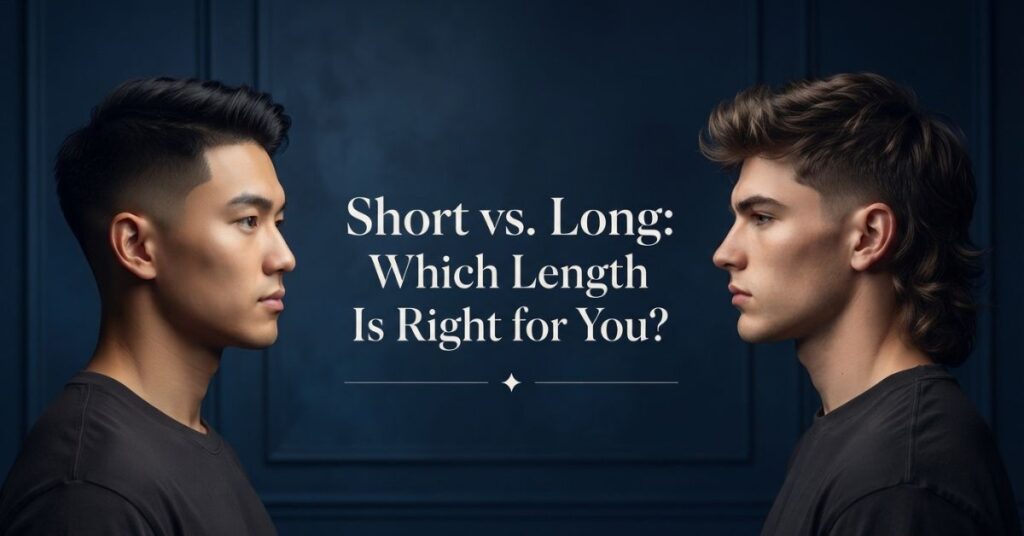
The back length is the single biggest decision you’ll make with this haircut, and it changes how the whole style reads.
Short back (collar length or above) is the safest starting point. It’s easy to maintain, quick to trim back into a regular cut if you change your mind, and subtle enough that most people won’t immediately clock it as a mullet. This length is ideal for first-timers or anyone in a formal work environment.
Medium back (past the collar, above the shoulders) is where the mullet identity really starts to show. It offers enough length for a visible tail or flick while still being manageable day to day. This is the most popular length because it balances boldness with practicality.
Long back (shoulder length or past it) delivers the full, dramatic mullet effect. It takes longer to grow into, needs more regular conditioning to avoid split ends, and requires more commitment overall. It’s best suited to those who already have some length to work with and want the most expressive version of the cut.
A good rule of thumb: if you’re unsure, start shorter. It’s far easier to grow a mullet longer over a few months than to recover from a length you regret.
Read More : Low Taper Fade With Design: Best Haircut Ideas, Styles, and Barber Tips for 2026
Low taper fade mullet for straight, wavy, curly, and thick hair
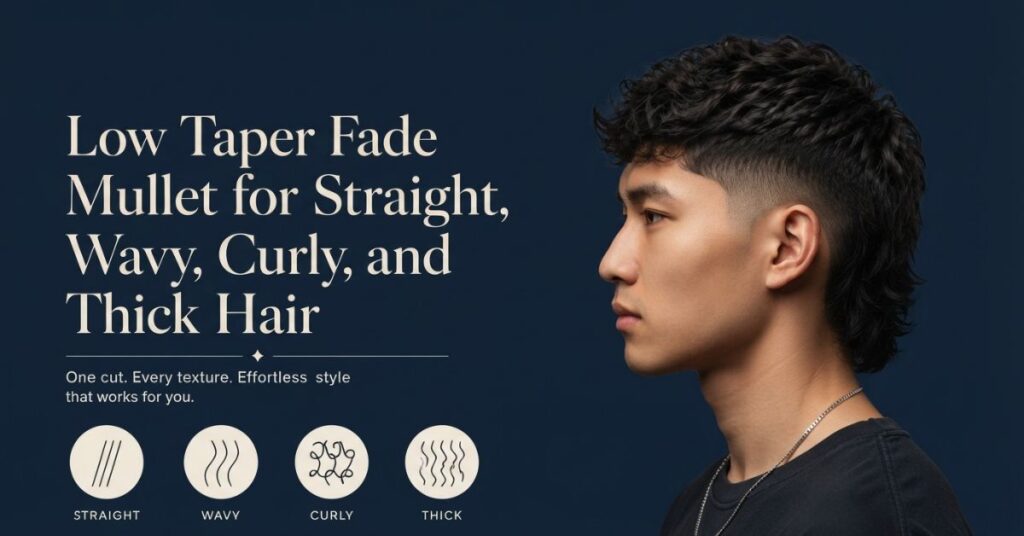
Hair type changes how this cut behaves more than almost any other factor, so it’s worth understanding what to expect from yours.
Straight hair
Straight strands can look flat or clump together at the back if the layers aren’t cut correctly, so ask your barber for deliberate layering through the nape to add shape. A light texturizing spray applied before blow-drying helps prevent that heavy, single-block look and keeps the top from sitting stiff.
Wavy hair
Wavy hair tends to be the easiest texture to work with because the natural movement does a lot of the styling for you. Light layers let the wave pattern stack properly through the back instead of puffing out. A small amount of curl cream applied to damp hair enhances definition without weighing the waves down.
Curly and coily hair
Curls and coils add natural volume and texture that straighter hair has to fake with product. The main styling priority here is hydration rather than hold, since curly hair tends to run drier. A leave-in conditioner or curl cream, plus air-drying instead of heat styling, keeps the pattern healthy and defined.
Thick and fine hair
Thick hair usually handles the low taper fade mullet beautifully because there’s enough density to support both the longer back and a fuller top, though it may need more frequent thinning to avoid bulk. Fine hair benefits from lighter layering and a texturizing powder or sea salt spray to create the illusion of extra volume and prevent the style from looking limp.
Read More : Mid taper fade buzz cut: styles, guard lengths, and barber guide
Which face shapes suit a low taper fade mullet best?
Because the length and top styling are so adjustable, this cut flatters more face shapes than most mullet variations, but small adjustments help it work harder for you.
- Oval faces can wear almost any version of this cut with minimal adjustment, since the shape is already balanced.
- Square faces look great with a bit more length and softness on top, which takes the edge off strong jawlines.
- Round faces benefit from added height at the crown and a slightly higher fade line, since this creates the illusion of length and prevents extra width.
- Heart-shaped faces do well with fuller sides and a softer fade, which balances a narrower jawline against a wider forehead.
- Rectangular or long faces suit a fuller top with a lower fade, since minimizing vertical length helps keep proportions balanced.
If you’re unsure which category you fall into, a barber can usually judge this in seconds and adjust the fade height and top length accordingly.
How to ask your barber for the perfect low taper fade mullet
Miscommunication is the most common reason people leave the chair disappointed, since “mullet” means something different to every barber. Be specific with these details:
- Name the fade height. Say “low taper fade starting about an inch above my ear” rather than just “fade.”
- Specify the back length. Use a clear reference, such as “collar length” or “shoulder length,” instead of vague terms like “long.”
- Describe the top. Mention whether you want it choppy and textured, longer and swept back, or somewhere in between.
- Bring a reference photo. Even with clear language, a photo removes almost all ambiguity about proportions.
- Ask about growth strategy. If you’re not ready for full mullet length, ask your barber how to cut it now so it grows into a longer version cleanly later.
How to style a low taper fade mullet at home, step by step
Daily styling is genuinely quick once you know the routine that suits your hair type.
- Start on damp hair. Towel-dry until hair is damp rather than soaking wet, which gives product better grip.
- Apply a light product. Use sea salt spray for texture, curl cream for definition, or a lightweight mousse for volume, depending on your hair type.
- Blow-dry on low heat. Direct airflow from roots to ends, lifting at the crown if you want extra height on top.
- Shape the top. Use your fingers to pinch and separate pieces for a textured look, or a comb for a smoother, more polished finish.
- Finish the back. A small amount of matte clay or pomade on the ends helps define the mullet shape without making it look greasy.
- Set with a light hold spray. This step is optional but helps the style survive a full day, especially in humid weather.
How often should you trim and maintain it?
The low placement of the fade is one of the biggest upkeep advantages of this haircut, but it still needs a routine.
- Fade touch-ups: every 4 to 6 weeks, since the low blend hides regrowth far longer than a high or skin fade.
- Back trim: every 8 to 12 weeks, just enough to remove split ends and maintain shape without sacrificing the length you’re growing.
- Top trim: every 6 to 8 weeks if you’re keeping a defined shape, or skip entirely if you’re growing it out.
- Conditioning: at least once a week, more often for curly or color-treated hair, since the longer back section is more prone to dryness and breakage than short, uniform cuts.
- Between-visit care: a light trim of the very ends at home with proper shears can help longer mullets stay neat between barber visits, though the fade itself should always be left to a professional.
Sticking to this rhythm keeps the contrast between the fade and the length looking intentional rather than like a haircut that’s simply overdue.
Low taper fade mullet FAQs
Does a low taper fade mullet suit thin hair?
Yes. Lighter layering and a texturizing spray or powder can add the appearance of volume without overwhelming finer strands.
How long does it take to grow a proper mullet back length?
Most people need six to twelve months of growth from a short cut, depending on how fast their hair grows and how much length they’re keeping on top.
Is this haircut appropriate for a professional workplace?
Generally yes, since the low fade keeps the front and sides looking tidy, though a shorter back length is the safer choice in conservative settings.
Can I get a low taper fade mullet with color-treated hair?
Absolutely. Just mention any recent coloring to your barber, since chemically treated hair may need gentler layering to avoid extra breakage.
What’s the difference between a low taper and a low fade mullet?
A taper leaves a bit more length throughout the sides for a softer look, while a fade blends all the way down to the skin near the hairline for sharper contrast.
Will a low taper fade mullet work with a beard?
Yes, and many barbers recommend blending the beard’s fade with the haircut’s fade for a cohesive, intentional look.
Read More : Low Taper Fade: The Complete 2026 Haircut & Style Guide
Final takeaway
The low taper fade mullet earns its popularity honestly. It offers the personality and length of a classic mullet with the polish and low-maintenance regrowth of a modern taper fade, and it adapts to nearly every hair type and face shape with small adjustments.
Whether you go with a subtle textured crop or commit to a full shaggy surfer length, the key is clear communication with your barber and a realistic sense of how much upkeep you’re willing to commit to. Start conservative if you’re new to the style, stay consistent with trims, and you’ll get a haircut that looks deliberate at every stage of growth.

