

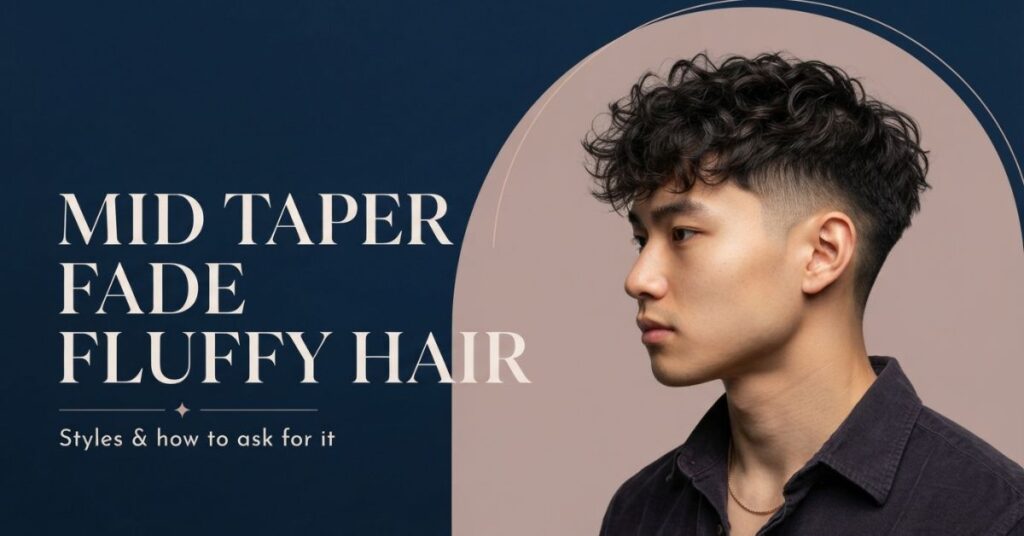
A Mid Taper Fade Fluffy Fringe hair pairs a clean, gradual fade on the sides with a full, voluminous top that moves naturally instead of lying flat. It has become one of the most requested men’s haircuts because it works with almost any hair type, needs less daily styling effort than a spiky or slicked look, and grows out without looking messy. This guide breaks down exactly what the cut is, who it suits, how it compares to other fades, and how to ask for it and style it so the volume actually lasts.
What is a Mid Taper Fade Fluffy Fringe hair?
A Mid Taper Fade Fluffy Fringe hair combines two separate barbering decisions. The first is where the fade sits on the head. The second is how the top is cut and styled so it looks soft, rounded, and full rather than flat or spiky.
What does “mid taper fade” mean at the barbershop?
A Mid Taper Fade Fluffy Fringestarts blending the hair around the middle of the head, roughly at temple level, then tapers down gradually to the shortest length at the neckline and around the ears. It sits between a low fade, which begins near the ear, and a high fade, which starts much higher on the sides.
Because the fade begins mid height, it keeps more length and weight on the upper sides than a high fade does. That extra weight matters for a fluffy top, since the hair on top has some support instead of floating over completely bare sides.
What makes the top look “fluffy”?
Fluffiness comes from three things working together: length, texture, and volume at the root.
- Length: the top needs enough length, usually 2 to 4 inches depending on hair type, for the strands to arch and layer over each other.
- Texture: point cutting or texturizing shears remove weight so the hair separates into soft pieces instead of falling as one flat sheet.
- Root lift: blow drying against the direction of natural fall, or diffusing curly hair, lifts the roots so the top has height and bounce rather than sitting flat.
Barbers sometimes describe this finish as a “blowout top” or “textured top.” Whatever the name, the goal is the same: a rounded, airy silhouette that contrasts with the Mid Taper Fade Fluffy Fringe underneath.
Is this haircut right for your hair?

Most hair types can wear a fluffy mid taper fade, but a few factors decide how easy it will be to style day to day and how close the result will look to the reference photos you bring in.
Which hair textures and densities work best?
Wavy and curly hair tend to fluff up with the least effort because the natural bend already creates lift and separation. Thick, medium density hair holds volume well through the day. Fine, straight hair can still achieve the look, but it usually needs a volumizing product and a blow dry technique to avoid falling flat by midday. Very fine or thinning hair may need shorter top lengths and lighter products so the fluff doesn’t collapse under its own weight.
Density matters as much as texture. Thicker hair naturally supports more height, while thin hair benefits from shorter layers and root-focused styling products rather than heavy creams that weigh strands down.
Read More : Mid Taper Fade Edgar: Styles, Barber Guide & Maintenance
How much top length and fringe do you need?
A good starting point is 3 to 4 inches on top for straight or wavy hair, and slightly less for curly or coily hair since curl pattern adds visual length. The fringe, or front section, is usually left a bit longer than the crown so it can be pushed up and forward for a soft, rounded shape.
If you’re unsure, ask your barber to leave extra length on the first cut. It’s easy to trim more off at your next visit, but impossible to add length back once it’s cut too short.
Mid taper vs low taper vs mid fade: which is better for fluffy hair?

These three terms get mixed up constantly, and the differences directly affect how the fluffy top reads visually.
A low taper fade begins near the ear and neckline, keeping most of the side hair long. This creates a softer, more gradual transition into the fluffy top, which is why it’s popular for naturally curly or textured hair that people want to keep looking effortless.
A mid taper fade starts higher, around the temple, giving a sharper line of contrast between the short sides and the voluminous top. This makes the fluffy top look bolder and more defined, since the eye sees a clearer break between short and long hair.
A mid fade is often used interchangeably with mid taper fade, though some barbers use “fade” to mean the hair fades all the way down to skin, while “taper” leaves a small amount of length at the very bottom instead of going bare. A true Mid Taper Fade Fluffy Fringe gives sharper contrast; a taper gives a softer, more natural finish that’s easier to maintain between cuts.
Compare contrast, side weight, grow-out, and styling
- Contrast: mid fade to skin gives the highest contrast; mid taper gives moderate contrast; low taper gives the softest contrast.
- Side weight: low taper keeps the most weight on the sides, which helps frame a fluffy top for round or square faces.
- Grow-out: taper fades grow out more evenly than skin fades, since there’s no bare patch that needs constant upkeep.
- Styling effort: higher contrast styles show more visible growth within two to three weeks and need more frequent trims to stay sharp.
Read More : Low Taper Fade Mullet: Styles, Hair Types, Face Shapes, and Upkeep
Which mid taper fade fluffy hair variation should you choose?
Once the Mid Taper Fade Fluffy Fringe height is settled, the top can be styled several different ways depending on hair type and how much daily effort you want to put in.
Fluffy fringe

The fringe is left longer than the rest of the top and brushed or blow dried forward and slightly up, creating a soft curtain of hair across the forehead. This works especially well with straight to wavy hair and pairs naturally with a mid taper for a youthful, effortless look.
Blowout taper
This variation pushes the volume further, with the top blow dried up and back using a round brush for maximum height and airiness. It suits thicker hair that can hold shape, and it’s the go-to choice for anyone who wants the fluffiest, most voluminous result.
Wavy, curly, or coily top
Natural curl pattern does a lot of the work here. A diffuser attachment on a blow dryer, combined with a curl cream or light gel, enhances the existing wave or curl instead of fighting it, giving a fuller, bouncier top with minimal daily styling.
Messy textured top
Rather than a defined shape, this version uses texturizing spray or matte clay worked through with the fingers for an undone, piecey finish. It’s lower maintenance than a structured blowout and hides regrowth well between cuts.
What should you ask your barber for?

Vague as Mid Taper Fade Fluffy Fringe requests like “make it fluffy” often lead to results that don’t match what you had in mind. Being specific gets you a far more predictable outcome.
Use a four-part barber script
- Fade height: say “mid taper” and point to your temple as the starting point for the blend.
- Finish at the bottom: specify whether you want it faded to skin or tapered with a small amount of length left.
- Top length: give an approximate length in inches, or say “leave it long enough to style with volume.”
- Texture: ask for point cutting or texturizing shears on top so the hair separates instead of sitting heavy.
Bring the right reference photos
Photos remove almost all the guesswork. Bring two or three images that show the fade height clearly and at least one close-up of the top texture you want. If your hair type differs from the photo, mention it so your barber can adjust the cutting technique rather than copying the exact same steps on different hair.
Read More : Low Taper Fade With Design: Best Haircut Ideas, Styles, and Barber Tips for 2026
How do you style a fluffy mid taper fade at home?
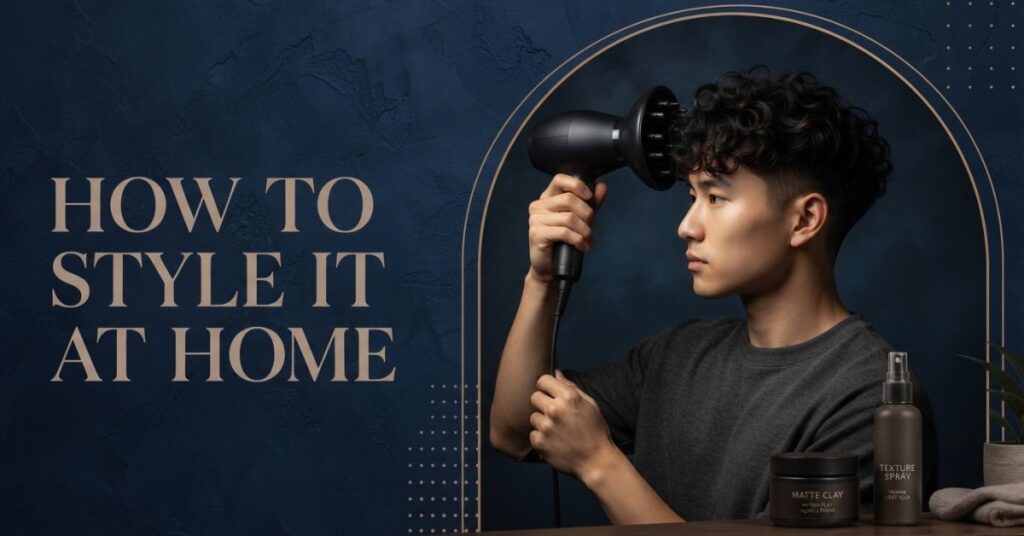
Getting the barbershop result at home comes down to a consistent routine rather than any single product.
Follow a five-step styling routine
- Towel dry hair until it’s damp, not dripping.
- Apply a small amount of volumizing mousse or texture cream, working it through from root to tip.
- Blow dry against the direction the hair naturally falls, lifting the roots with your fingers or a round brush as you go.
- Dry until the hair is roughly 80 to 90 percent finished, then let the last bit air dry to avoid overheating.
- Finish by breaking up the shape with your fingers or a wide tooth comb, adding a light hold spray if you want it to last through the day.
Choose products by finish, texture, and hold
- Mousse or volumizing spray: best for fine or straight hair that needs lift at the root without added weight.
- Texture cream or clay: best for medium to thick hair that wants definition and separation with a natural, matte finish.
- Curl cream or light gel: best for wavy, curly, or coily hair, since it defines the curl pattern without drying it out.
- Light hold hairspray: useful as a final step to hold volume in place, especially in humid weather.
Apply less than you think you need. It’s always possible to add more product, but excess cream or wax at the start of the routine is the fastest way to flatten the fluff you’re trying to create.
How do you maintain the cut without losing volume?
A fluffy mid taper fade looks best in the first one to two weeks after a cut, but a few habits keep it looking fresh for longer.
When should you refresh the taper and reshape the top?
Most people need a fade refresh every two to three weeks, since the sides grow out faster than they appear to and start blurring the contrast with the top. The top itself can usually go four to six weeks between trims, since a small amount of extra length actually helps maintain volume and movement.
How can you reduce heat and styling damage?
Use a heat protectant spray before blow drying, keep the dryer on a medium setting rather than the highest heat, and avoid drying the same section for more than a few seconds at a time. Washing with a lightweight, sulfate-free shampoo a few times a week, rather than daily, also helps prevent the hair from drying out and losing its natural bounce.
What mistakes make this haircut look flat or too bulky?
A few common errors show up again and again with this style.
- Using too much product, which weighs the top down and collapses the volume within an hour.
- Skipping the blow dry step entirely and expecting air-dried hair to hold the same shape.
- Choosing a fade height that’s too high for a thick top, which can make the volume look top heavy instead of balanced.
- Leaving the top too short to layer properly, which limits how much fluff the hair can actually create.
- Going too long between fade touch-ups, which lets the sides grow out and blur the clean contrast that defines the style.
FAQs about Mid Taper Fade Fluffy Fringe
Does a Mid Taper Fade Fluffy Fringe work with thin hair?
Yes, but keep the top slightly shorter and use lightweight volumizing products instead of heavy creams to avoid weighing the hair down.
How long does it take to grow into this style?
Most people reach a workable fluffy top length within eight to twelve weeks of growth from a shorter cut.
Can curly hair get a mid taper fade with fluffy hair?
Yes, curly hair often achieves the fluffy look with the least effort, since natural curl pattern already creates volume and texture.
Is a mid taper fade high maintenance?
It needs a fade touch-up every two to three weeks and a few minutes of daily styling, which makes it moderate rather than low or high maintenance.
What’s the difference between fluffy and messy styling?
Fluffy styling uses blow drying and root lift for a rounded, intentional shape, while messy styling relies on texture products for an undone, piecey finish.
Can I switch from a low taper to a mid taper later?
Yes, your barber can raise the fade line at your next appointment without needing to start the haircut over.
What to do before your appointment
Wash your hair the day before so your barber can see its true texture and how it naturally falls. Bring two or three clear reference photos, note your current top length in inches if you know it, and mention your hair type, whether it’s fine, thick, straight, wavy, curly, or coily, so the cutting technique can be adjusted to suit it. Walking in with this information turns a vague request into a precise plan, and it’s the single biggest factor in leaving the chair with a mid taper fade and fluffy top that actually matches what you pictured.The Mid Taper Fade Fluffy Fringe hair look classy .

