

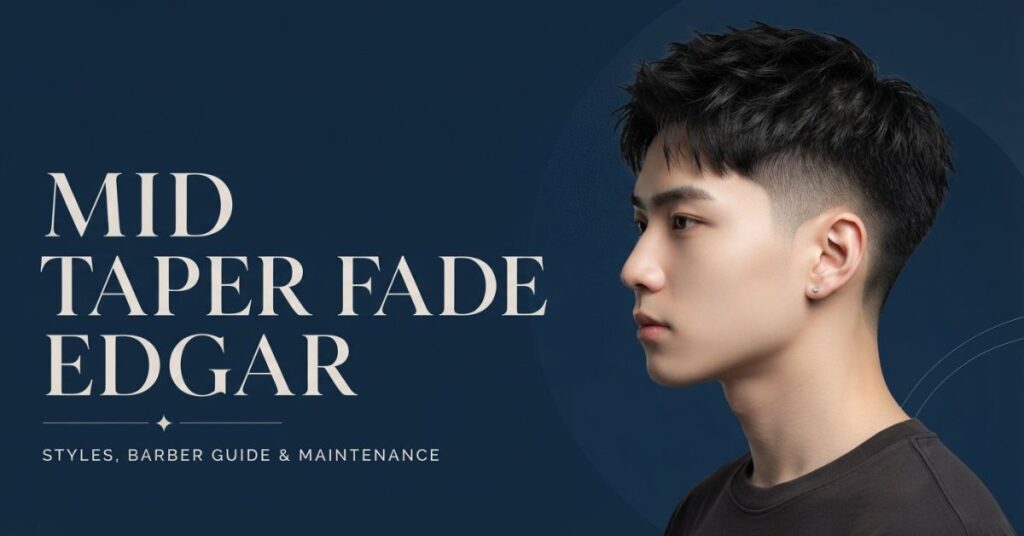
If you’ve scrolled past a dozen photos of the same blunt fringe and clean side fade and thought “I want that, but not too dramatic,” the mid taper fade Edgar is probably the cut you’re picturing. It’s the middle ground of the Edgar family: enough contrast to look sharp, not so much that you need a touch-up every ten days.
This guide breaks down exactly what the cut is, who it works for, the main style variations, how to talk to your barber about it, and how to keep it looking fresh between visits.
What is a mid taper fade Edgar?
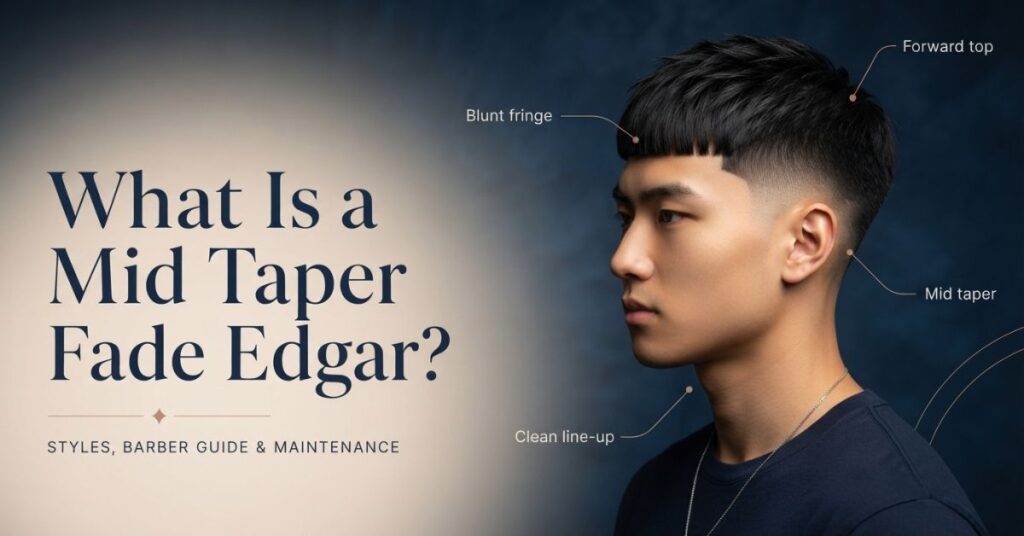
A mid taper fade Edgar is an Edgar haircut where the side fade begins at the temple, roughly halfway between the ear and the crown. It pairs a short, tapered side and back with the Edgar’s signature blunt fringe across the forehead.
Two separate things are happening in that name, and separating them makes the whole haircut easier to understand.
- “Edgar” describes the top and the fringe: a straight, hard line cut just above the eyebrows, sitting over hair with enough length and weight to fall forward.
- “Mid taper” describes only the sides and back: where the fade starts and how much contrast it creates.
Change the taper height and you still have an Edgar. Change the fringe, and you don’t.
What makes an Edgar an Edgar?
The fringe is the non-negotiable part of the cut. It needs to be:
- Cut in a straight, blunt line across the forehead, usually just above or right at eyebrow level
- Dense enough to read as a solid edge rather than wispy strands
- Paired with a clean, defined hairline and temple outline
Without that hard line, you’re looking at a Caesar cut or a French crop, not an Edgar. The fade height is flexible. The fringe shape is not.
Terminology and cultural context
The Mid taper fade Edgar is closely associated with Latino, and particularly Mexican-American, youth culture in the US Southwest, and you’ll frequently see it called the “takuache” or “cuh” in barbershop conversation and on social media. There’s no single agreed-upon story for where the name “Edgar” came from, so treat the various origin explanations as folklore rather than settled fact.
Knowing this context matters practically, too. If you use “takuache” or “Edgar” with a barber who’s familiar with the style, you’ll get a much faster, more accurate consultation than if you try to describe it feature by feature.
What does the mid taper change?
The taper height only adjusts two things: how much contrast there is between the top and sides, and how much hair stays on the upper part of the head. It doesn’t touch the fringe, the top length, or the overall silhouette.
A mid taper starts higher than a low taper (which begins near the ear) but lower than a high taper (which starts closer to the crown). That middle placement is why it’s often recommended as a starting point for anyone trying an Edgar for the first time.
Mid taper vs low taper, high taper, and the French crop
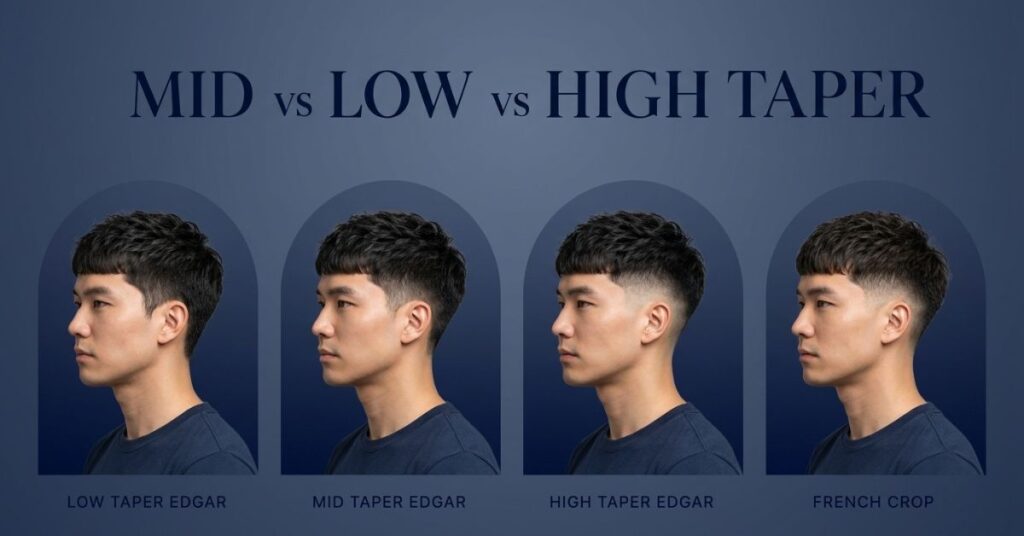
Here’s how the four most commonly confused options actually compare:
| Style | Fade start point | Contrast level | Best for |
|---|---|---|---|
| Low taper Edgar | Near the ear | Subtle | Office settings, first-time Edgar wearers, thicker hair |
| Mid taper Edgar | Temple area | Moderate | Most face shapes and hair types, an all-around balance |
| High taper Edgar | Near the crown | Strong, high contrast | Angular faces, guys who want a bolder statement |
| French crop | No fade requirement; often a skin or short fade | Varies | Shorter fringe, more relaxed, less rigid than an Edgar |
The mid taper sits deliberately in the middle. It has more visual definition than a low taper without the aggressive, “just left the barbershop” look of a high taper. The French crop is worth mentioning because people often confuse it with the Edgar, but the crop uses a shorter, softer fringe and doesn’t require the same hard blunt line, so the two cuts read very differently once styled.
Is a mid taper Edgar right for your hair and face?
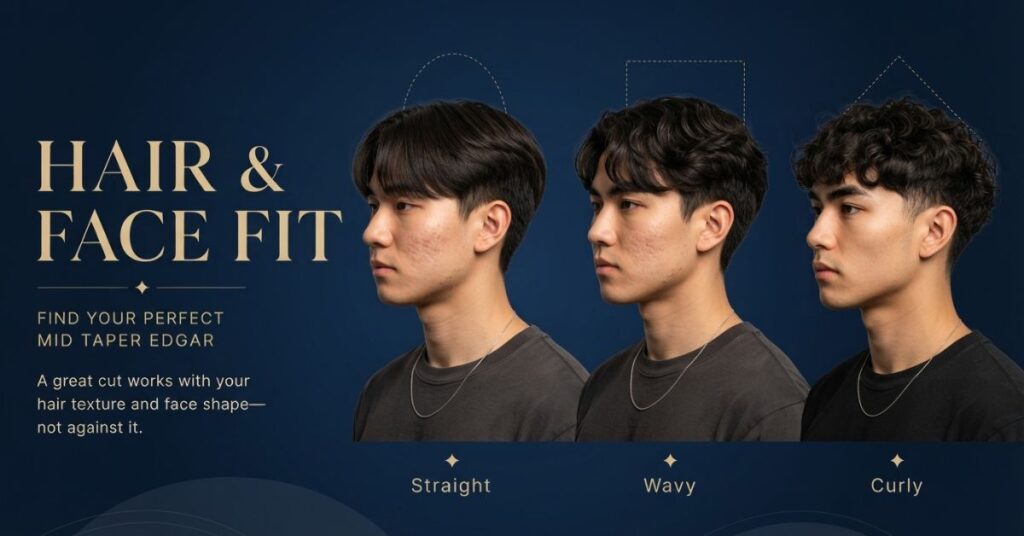
Almost anyone can wear a version of this cut, but a few things about your hair and head shape will decide how close you get to the “textbook” look versus a personalized variation.
Which hair types work best?
- Straight hair takes the cleanest, sharpest version of the fringe and shows off the fade line most clearly.
- Wavy hair adds natural texture to the top, which softens the silhouette without losing the fringe’s edge.
- Curly hair works well too, though the fringe usually won’t sit in a perfectly straight line on its own; it needs to be combed and, in most cases, lightly product-styled forward to read as blunt.
- Fine hair benefits from the taper’s contrast, since it creates the illusion of more density on top.
- Thick hair may need more thinning at the crown so the top doesn’t look bulky against the tapered sides.
Which proportions and growth patterns need adjustment?
- Round faces generally look better with a bit more length left in the fringe and top, since that adds vertical line and avoids emphasizing width.
- Square or angular faces can usually handle a shorter, tighter version without it looking too severe.
- Heart-shaped faces often benefit from a slightly longer fringe, which balances a wider forehead against a narrower jaw.
- Cowlicks or a strong hair whorl at the crown can fight the forward-falling top; your barber may need to cut with the grain and recommend a specific styling product to keep the fringe from lifting.
- A receding hairline is worth flagging in the consultation, since it changes how high the fringe can realistically sit.
Which mid taper fade Edgar styles should you consider?
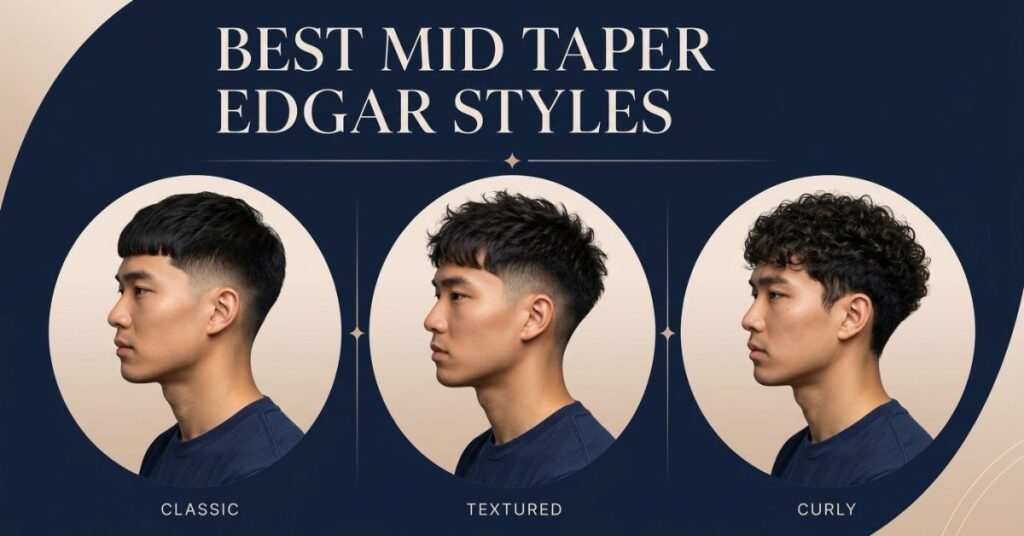
The mid taper fade Edgar is a base, not a single fixed look. Here are the three most common directions to take it.
Classic blunt mid taper Edgar
This is the reference version: dense, straight-across fringe, tight temple and nape outline, and a mid taper fade doing the work on the sides. It’s clean, low-drama, and the easiest version for a barber unfamiliar with your preferences to get right the first time. Straight or lightly wavy hair suits this version best because the fringe holds its line with minimal product.
Fluffy or textured mid taper Edgar
Here the top is left slightly longer and cut with more texture at the crown, giving it lift and movement instead of lying completely flat. The fringe stays blunt, but the rest of the top has more volume. This works particularly well for round faces, since the added height balances width, and for fine hair, since texture creates the appearance of thickness.
Read More : Low Taper Fade With Design: Best Haircut Ideas, Styles, and Barber Tips for 2026
Curly or wavy mid taper Edgar
Natural curls or waves are kept on top rather than straightened out, creating contrast between the tight, clean-faded sides and the looser, springier top. A curl-defining cream or light gel is usually necessary to keep the fringe readable as a line rather than a fuzzy edge. This version tends to need less frequent restyling day to day since curls hold their own shape.
How do you ask your barber for a mid taper Edgar?
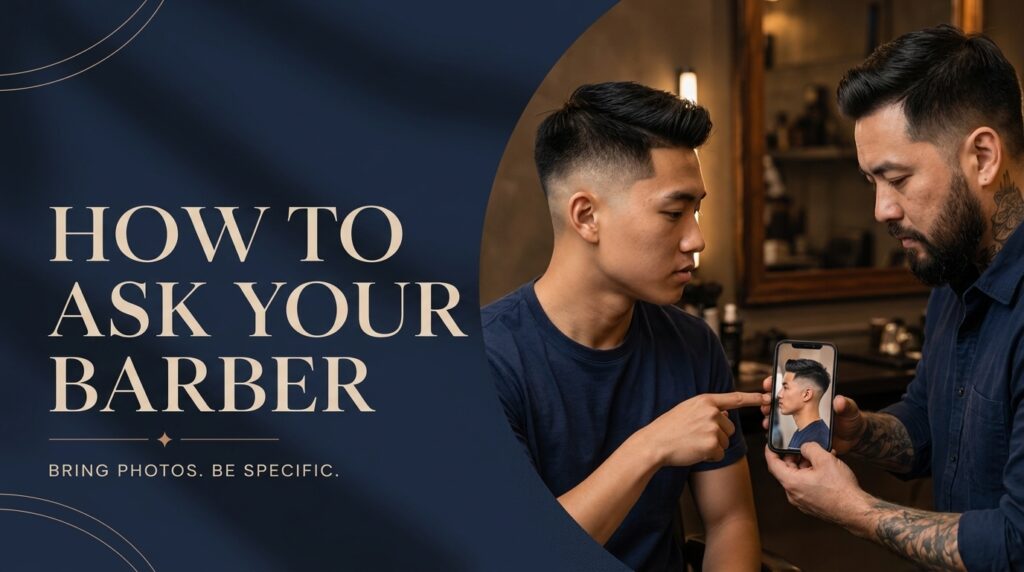
Clear communication matters more with this cut than with most, because “Edgar” and “mid taper” mean specific things to a barber, and vague requests lead to vague results. Use language like this:
- “I’d like an Edgar cut, mid taper fade on the sides.”
- “Straight, blunt fringe just above my eyebrows, please, not choppy or piecey.”
- “Start the fade around my temple, not near my ear and not up near the crown.”
- “Keep a clean, sharp outline around the hairline and temples.”
- “I want [more/less] texture on top” to indicate whether you want the classic, fluffy, or curly-forward finish.
What reference photos should you bring?
Bring two to three photos, not one, and choose ones that show:
- A front-facing shot of the fringe length and straightness
- A side profile showing exactly where the taper starts
- Hair texture similar to your own, if possible, since a photo of straight hair won’t translate perfectly onto curly hair
If you can’t find a photo matching your hair type, say so directly and ask the barber how the look will differ for your texture. A good barber would rather adjust expectations before cutting than after.
What happens in the barber’s chair?
Most barbers follow a similar sequence for this cut:
- Consultation. Confirm fringe length, taper height, and how much texture you want on top.
- Sectioning. The top is clipped up out of the way while the sides and back are worked on first.
- Tapering the sides and back. Clippers blend from short at the bottom to longer near the temple, creating the mid-height transition.
- Cutting the top. Scissors or clippers-over-comb shape the crown and length, leaving enough weight for the hair to fall forward.
- Cutting the fringe. This is done last and with the most care, since it’s the most visible and least forgiving part of the cut. The barber will often comb the fringe down wet first to see exactly where it falls before trimming the final line.
- Line-up and detailing. A straight razor or trimmer defines the hairline, temples, and nape for a crisp finish.
- Dry styling. Hair is blow-dried into place, sometimes with product, so you can see the finished result and request small adjustments before you leave.
Expect this to take anywhere from 30 to 45 minutes, longer than a basic fade, because of the precision the fringe and taper blend both require.
How do you style a mid taper fade Edgar at home?
Daily maintenance is fairly quick once you know the routine, but it does differ depending on your hair type.
Straight hair
- Start with damp, not soaking wet, hair.
- Comb the fringe straight down and forward.
- Apply a small amount of pomade or styling wax, focusing on the front section.
- Use a comb or your fingers to press the fringe flat against the forehead.
- Let it air dry or use a blow dryer on a cool setting to lock the shape in place.
Wavy or curly hair
- Apply a curl cream or lightweight gel to damp hair.
- Scrunch or press the top gently to encourage natural wave or curl pattern.
- Comb only the fringe section forward and flat, leaving the rest of the top textured.
- Avoid brushing curls out, since this can create frizz instead of definition.
- Let hair air dry fully before touching it again.
A small amount of product goes further than people expect. Over-applying wax or gel on the fringe is one of the most common at-home styling mistakes with this cut, since it weighs the hair down and makes the line look greasy rather than sharp.
How often does a mid taper fade Edgar need maintenance?

Most people need a trim every two to three weeks to keep the fade crisp and the fringe at its intended length. The taper grows out faster visually than the top does, since even a small amount of regrowth softens the contrast between the fade and the top hair.
The fringe itself can usually go a bit longer between trims, three to four weeks, before it starts to lose its sharp, straight edge, though if you prefer it very short and blunt you’ll likely want it addressed at every visit.
Read More : Low Taper Fade Mullet: Styles, Hair Types, Face Shapes, and Upkeep
What can you do between visits?
- Use a trimmer at home to clean up minor neck and sideburn growth if you’re comfortable doing it yourself
- Book your next appointment before you leave the chair, since a consistent two to three week cadence keeps the cut looking intentional rather than grown-out
- Avoid running your fingers through the fringe repeatedly through the day, since natural oils build up and flatten the line’s definition
- Wash with a clarifying shampoo occasionally if you use styling product daily, to prevent buildup that dulls the fade’s contrast
What are the downsides and common mistakes?

- Growing out unevenly. Because the fringe and the fade grow at different visible rates, going too long between cuts often means the fringe gets shaggy while the fade blurs into a mid-length side, losing the defined look entirely.
- Overusing product. Too much wax or gel on the fringe creates a stiff, unnatural line instead of a soft-edged, natural fall.
- Skipping the consultation. Not every barber cuts an Edgar the same way, and skipping a detailed conversation is the single biggest reason people end up with a fringe that’s too short, too long, or shaped wrong for their face.
- Ignoring hair texture during styling. Trying to force curly hair into a flat, straight fringe with too much tension or heat can damage curl pattern over time.
Can a close fade or line-up irritate skin?
Yes, tight fades and sharp line-ups can cause irritation, redness, or ingrown hairs for some people, particularly those with curlier hair that’s prone to curling back into the skin after a close cut. If you’re prone to this, mention it to your barber before the cut. Common adjustments include using clippers instead of a razor for the outline, avoiding shaving directly against the grain, and applying a soothing, alcohol-free aftershave balm once you’re home. If irritation persists or worsens, it’s worth checking with a dermatologist, since ongoing razor bumps can sometimes need a different treatment approach than at-home care alone.
What are the alternatives if the Edgar is not for you?
If you like the tapered sides but aren’t sold on the hard fringe, consider:
- French crop. Shorter, softer fringe with a more relaxed front line, still paired with a taper or fade on the sides.
- Caesar cut. Uniform short length all over with a forward-styled top, no blunt fringe requirement.
- Textured crop with a side part. Keeps a defined, faded side but moves the visual focus away from a straight-across fringe.
- Standard taper fade with a longer top. All the side contrast of the Edgar without committing to the forward, blunt front line.
Any of these can be a good middle step if you want to test the waters with a taper fade before committing to the more distinctive Edgar fringe.
Mid taper fade Edgar FAQs
How long does hair need to be to get a mid taper fade Edgar?
Around two to three inches on top is usually enough to create a blunt, forward-falling fringe with the mid taper fade on the sides.
Can I get a mid taper fade Edgar with a beard?
Yes, a well-groomed beard pairs naturally with this cut and often helps balance the sharpness of the fringe and fade.
Is the mid taper fade Edgar a good first Edgar haircut?
Yes, its balanced contrast makes it a safer starting point than the more dramatic high taper version.
Does this cut work for receding hairlines?
It can, but the barber usually needs to adjust the fringe placement and length, so mention this during your consultation.
How much does a mid taper fade Edgar typically cost?
Pricing varies by region and barbershop, generally falling in line with a standard taper fade plus a small premium for the detailed fringe work.
Will a mid taper fade Edgar suit thin hair?
Yes, the contrast between the tapered sides and fuller top helps thin hair look denser than it would with an all-over uniform length.
Read more : Low Taper Fade: The Complete 2026 Haircut & Style Guide
Bottom line
The mid taper fade Edgar earns its popularity by sitting exactly where most people actually want to be: sharp enough to look deliberate, subtle enough to wear anywhere. The fringe is what makes it an Edgar, the taper height is simply a dial you and your barber turn to match your face shape, hair type, and how much contrast you’re comfortable with. Bring clear reference photos, describe your hair texture honestly, and book your touch-ups every two to three weeks, and this cut will hold its shape and its edge visit after visit.

