


A sharp cut can change how you feel walking into a room. The Low Taper Fade Haircut for Black Men is one of the cleanest ways to get that look without going too short or too bold.
It keeps the length you want on top and tidies the edges so the cut looks polished. It also works with coils, waves, twists, locs and a fresh buzz cut.
This guide covers what the cut is, which styles work best, what to tell your barber, and how to maintain it at home. You will also find costs, common mistakes and quick answers to the questions men ask most.
What Is a Low Taper Fade Haircut for Black Men?
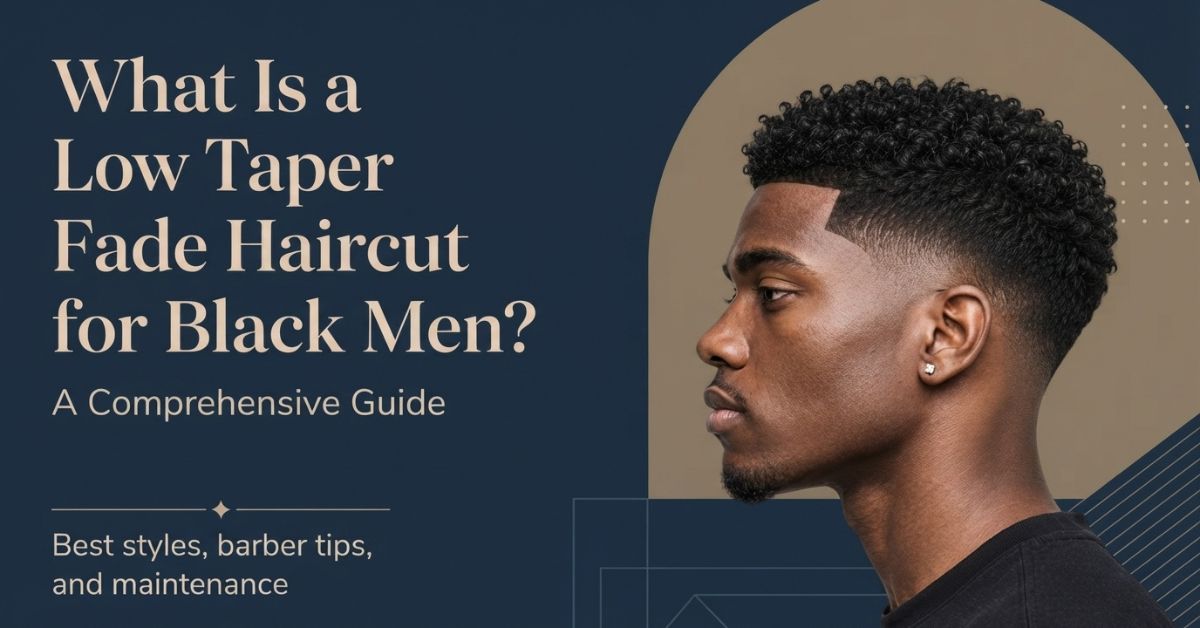
A low taper fade is a haircut where the hair gets gradually shorter around the sideburns and the nape, staying close to the hairline. The change in length is small and starts low, usually near or just above the ear. The top and most of the sides stay longer.
Quick facts:
- Where it starts: at the sideburns and the neckline.
- How it looks: subtle, soft and tidy.
- Best for: men who want a clean edge without a dramatic fade.
How It Differs From a Regular Fade
A regular fade usually blends from very short, sometimes bare skin, up to longer hair, and it can climb high on the head. A low taper fade stays small and low. It frames the hairline rather than changing the whole shape of the head.
A few simple differences:
- Contrast: a regular fade is more dramatic. A low taper fade is softer.
- Area covered: a fade can reach the temples and above. A low taper stays around the ears and the nape.
- Upkeep: a low taper fade grows out more gracefully because the length change is gentle.
Barbers also use the words loosely. Many say “taper fade” and mean a taper. Describing the exact result you want avoids confusion.
Why a Low Taper Fade Works With Black Hair Textures
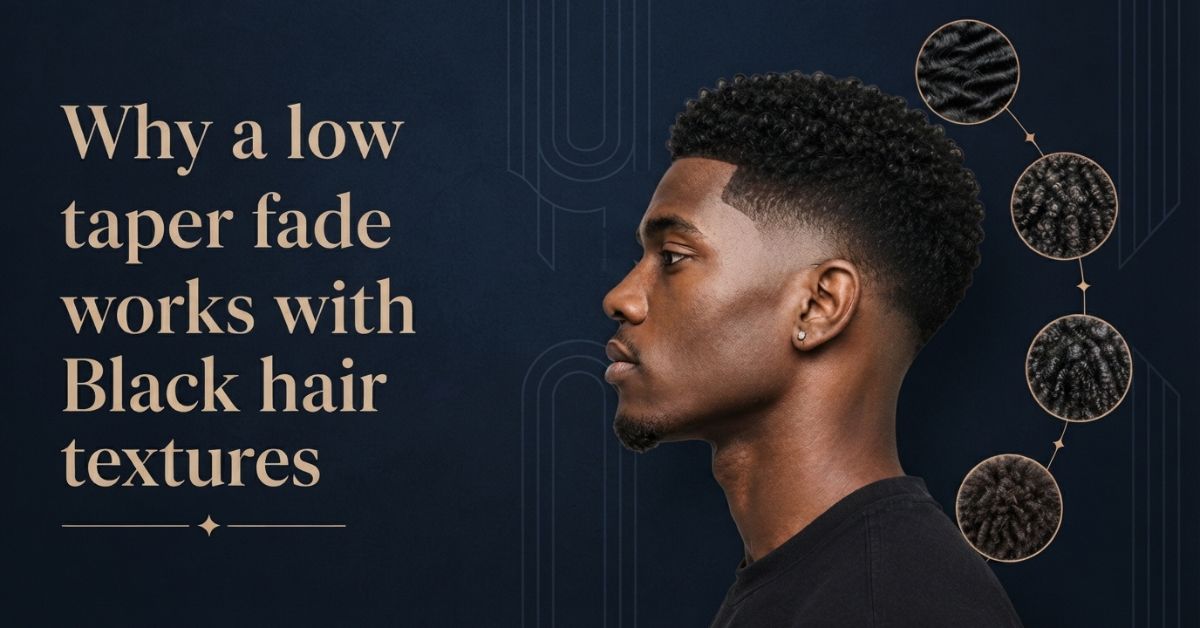
Black hair ranges from loose waves to tight 4C coils, and each texture grows out differently. A low taper fade works across that range for a few reasons.
- It keeps density where it matters. Coily hair looks full on top, and the taper keeps the weight without a bulky outline.
- It sharpens the hairline. Natural hair has a crisp edge that clippers define very cleanly.
- It grows out evenly. The soft transition avoids a harsh line as the hair returns.
- It suits protective and growth goals. You can grow twists, locs or an afro while keeping the edges neat.
One thing to know: tightly coiled hair shrinks, so it looks shorter than it measures. Tell your barber your goal length so the cut looks right once the hair springs back.
Best Low Taper Fade Styles for Black Men
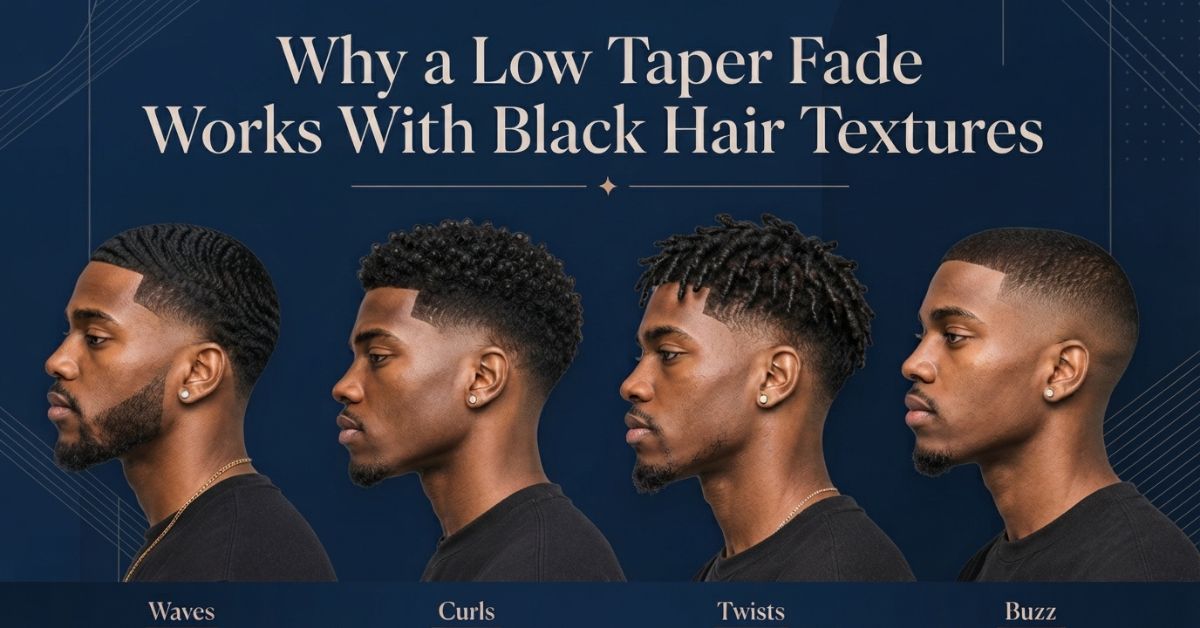
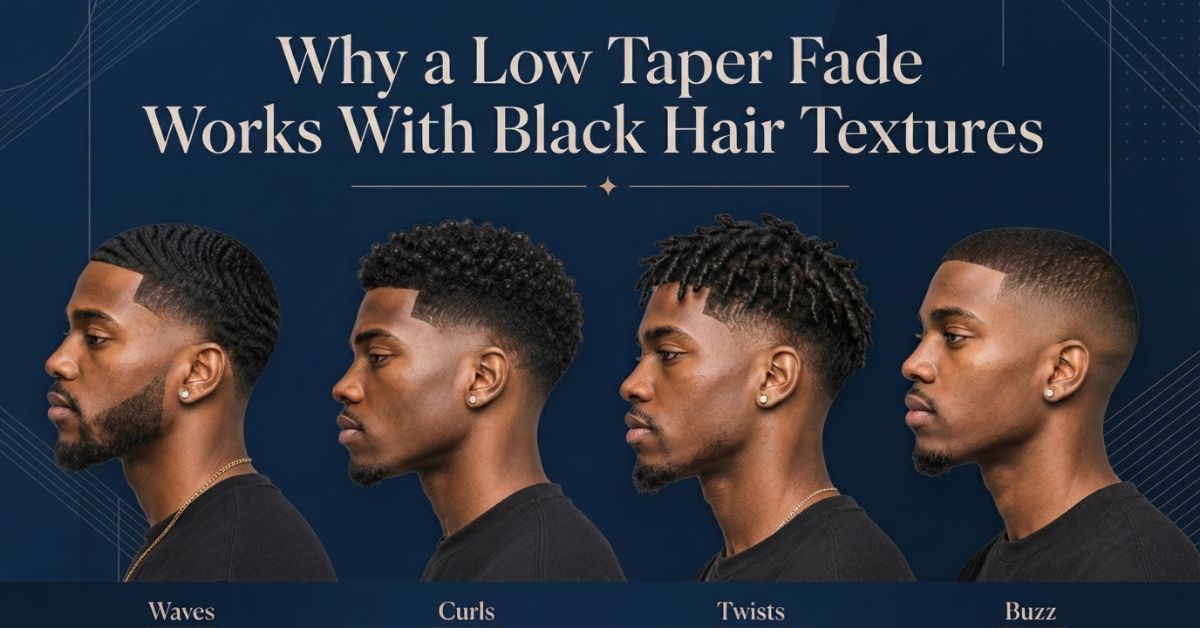
Low Taper Fade With Waves
Waves and a low taper are a natural pair. The clean edges make the wave pattern stand out.
- Brush daily, with a soft brush for the top and a firmer one for the sides.
- Wear a durag or wave cap overnight.
- Keep the top short, about a #2 to #3 guard, so the pattern is easy to see.
Low Taper Fade With Curls or an Afro
This is the best choice if you are growing your hair. The taper keeps the sides neat while the top gets bigger.
- Pick the shaped afro if you want a round look.
- Try a curly top with a gentle taper for a lighter feel.
- Pick your curl pattern first, then ask the barber to match the shape.
Low Taper Fade With Sponge Curls, Twists, or Locs
Texture styles on top look cleaner when the sides are trimmed.
- Sponge curls: the taper keeps the top defined and tidy.
- Twists: a low taper stops the style from looking messy at the edges.
- Locs: the neck and sideburn taper frames the locs without cutting into them.
Retwisting and loc maintenance still apply. The taper just makes the whole look sharper between appointments.
Low Taper Fade With a Buzz Cut
If you want the lowest upkeep, combine a buzz cut with a low taper. Keep the top at a #3 or #4 guard, then taper the sideburns and nape.
It is quick, professional and easy. The tradeoff is that you lose the look of length.
Low Taper Fade With a Beard and Line-Up
This is a classic pairing. The taper blends into the sideburns and connects to the beard for a smooth finish.
- Ask the barber to blend the beard into the taper so there is no gap.
- A line up (also called an edge up or shape up) squares the forehead and temples.
- A light beard oil keeps the beard soft and the skin calm.
Low Taper vs Mid Taper vs High Taper Fade
The main difference is how high the shorter hair travels. Here is a simple comparison.
| Type | Where it starts | Look | Best for |
|---|---|---|---|
| Low taper | Sideburns and nape, near ear level | Soft, subtle | Work, school, first timers |
| Mid taper | Around the middle of the ear | Balanced | Most men |
| High taper | Higher on the temple | Bold, sharp | Strong contrast |
If you want the cleanest cut with the least risk, start low. You can always go higher next time, but you cannot add length back.
How to Choose the Right Low Taper Fade for Your Face Shape
Face shape helps decide the length on top and how the cut sits.
- Oval: almost any style works. Keep it balanced.
- Round: add height on top and keep the sides tight to look longer.
- Square: a rounded top softens a strong jawline.
- Oblong or long: keep the top shorter and avoid too much height.
- Heart: a bit of length on top balances a narrow chin, and a beard can help.
Hairline and head shape matter too. If you have a rounder head or a visible crown, tell your barber so the blend follows your head and not a template.
What to Ask Your Barber for a Low Taper Fade
Clear words get better results. Say where the fade should start, how short it should be, and what you want on top.
Guard Lengths and Fade Height
Here is a simple starting point. Guard numbers are standard clipper sizes.
- Neckline and sideburns: a #0.5 or #1 guard (about 1.5 to 3 mm).
- Blend zone: a #2 guard (about 6 mm), stepped up gradually.
- Sides: a #2 or #3 guard (about 6 to 10 mm) if you want them short.
- Top: your choice, from a #3 or #4 for a buzz cut to several inches for curls.
You can say, “Low taper starting at a #1, blending to a #2, leave the length on top, and clean up the line.” Ask whether you want a taper that stops above the hair at the nape or a bald taper that goes down to skin.
Why a Reference Photo Helps
A photo removes guesswork because words like “low” and “short” mean different things to different people.
- Bring two or three images with a similar hair texture to yours.
- Point out what you like, such as the hairline or the length on top.
- Mention what to avoid, such as a high fade or a hard part.
How to Maintain a Low Taper Fade
How Often to Get a Touch-Up
Most men refresh a low taper fade every two to three weeks. Beard blends and line ups may need attention sooner. If you prefer a lived in look, you can stretch it to four weeks, but the edges will soften.
Daily and Weekly Routine
Keep the routine simple.
Daily:
- Moisturize your hair and scalp with a light leave in product.
- Brush your waves or pick out your afro gently.
- Tie up with a satin durag, bonnet or scarf at night.
Weekly:
- Wash with a sulfate free shampoo.
- Condition, or deep condition if your hair feels dry.
- Seal moisture with a light oil or butter.
Keeping the Hairline Fresh
- Avoid shaving the hairline at home with a dull razor.
- Use a trimmer for light cleanup between visits and go slowly.
- Protect against razor bumps (pseudofolliculitis barbae) by using clean tools and not shaving too close. If bumps are persistent or painful, talk to a dermatologist.
- Apply edge control only where needed, and wash it out regularly so it does not build up.
Best Products for a Low Taper Fade on Black Hair
You do not need a shelf full of products. A few good ones are enough.
- Leave in conditioner or curl cream: adds moisture and definition for curls and twists.
- Shea butter or a natural oil: seals moisture and reduces dryness.
- Edge control: keeps the hairline smooth. Choose a non flaky formula.
- Wave pomade or light gel: helps waves stay in place.
- Boar bristle brush: trains and polishes wave patterns.
- Satin durag or bonnet: protects the style while you sleep.
- Beard oil or balm: softens a beard and the skin under it.
- Sulfate free shampoo: cleans without stripping natural oils.
Check labels and patch test anything new, especially if you have sensitive skin.
Common Mistakes to Avoid
- Asking vaguely. “Just a fade” can mean many things. Be specific.
- Skipping moisture. Dry hair looks dull and breaks easily.
- Overdoing product. Heavy gels and edge control cause buildup and flakes.
- Waiting too long between cuts. The taper loses its shape fast.
- Cutting the hairline too low. Ask the barber to follow your natural hairline.
- Ignoring head shape. The same cut can look different on different head shapes.
- Picking the wrong barber. Look for one who works with your hair texture regularly and can show examples.
Low Taper Fade Cost and Appointment Time
Prices depend on your city, the shop and the barber, so treat these as rough ranges.
- Cost: a basic low taper fade often costs about $25 to $50 in the US. A beard trim, line up or design can add to the price.
- Time: expect about 30 to 45 minutes, or longer for a beard, a detailed line up or long hair.
- Tipping: tipping practices vary, and many people tip around 15 to 20 percent for good service.
Booking ahead and showing a reference photo usually saves time in the chair.
Is a Low Taper Fade Good for Work, School, and Formal Events?
Yes. The low taper fade is one of the most professional looking short haircuts because it looks tidy without drawing attention.
- Work: it fits corporate and creative offices, especially with a neat top and beard.
- School: it is easy to keep school appropriate and low drama.
- Formal events: a fresh line up and a polished top look sharp in a suit.
Some workplaces have grooming rules. If you are unsure, ask what is allowed and bring that to your barber.
FAQs About Low Taper Fade Haircuts for Black Men
What is a low taper fade on Black hair?
It is a haircut that gently shortens the sideburns and neckline while keeping length on top, following the natural hairline.
How is a low taper different from a low fade?
A low taper blends gradually and stays subtle. A low fade can go shorter and look more dramatic.
How often should I get a low taper fade touched up?
Every two to three weeks keeps it crisp. Four weeks works if you prefer a softer look.
Does a low taper fade work for 4C hair?
Yes. It keeps the sides neat while letting 4C hair grow on top. Tell your barber about shrinkage so the length looks right.
Can I get a low taper fade with locs or twists?
Yes. The taper cleans the edges and the neckline without touching the locs or twists.
Is a low taper fade professional?
Yes. It is clean and understated, which suits most workplaces and formal settings.
What guard should I ask for?
Most barbers start at a #0.5 or #1 at the bottom and blend up to a #2 or #3. Your barber can adjust.
How do I prevent razor bumps?
Use clean clippers, avoid shaving too close, and moisturize. See a dermatologist if bumps persist.
How long does a low taper fade take?
Usually 30 to 45 minutes, depending on the beard and the details.
Can I do a low taper fade at home?
You can do light cleanup, but a good blend takes practice. A barber is the safer choice.
Conclusion
The low taper fade is a smart choice if you want a clean, flexible haircut that works with your texture. It frames your hairline, suits waves, curls, twists and locs, and handles work and weekends without effort.
Be specific with your barber, bring a reference photo, and stick to a simple routine of moisture, protection and regular touch ups. Do that and the cut will look fresh for weeks.

