

A middle part low taper fade pairs a center-parted top with sides that fade softly near the ears and neckline. It sits right between a sharp barbershop cut and an easy, undone look, which is exactly why so many men are asking for it in 2026. This guide breaks down who it suits, how to describe it to your barber, and how to keep it looking sharp between visits.
If you have been scrolling haircut inspiration lately, this cut has probably shown up more than once. Barbers report booking it constantly this year because it photographs well, styles quickly, and works across straight, wavy, and curly hair without asking for a dramatic change. Below, we cover the full decision, from face shape to daily styling, in plain, practical language.
Quick takeaways:
- A middle part on top, combined with a taper that starts low near the ears and neckline.
- Reads polished but relaxed, and grows out far more gracefully than a high fade.
- Suits straight, wavy, and curly hair, plus most face shapes with small adjustments.
- Needs roughly 3 to 4 inches on top so the part falls naturally on both sides.
- Requires a taper touch up every 2 to 4 weeks to stay defined.
What Is a Middle Part Low Taper Fade?
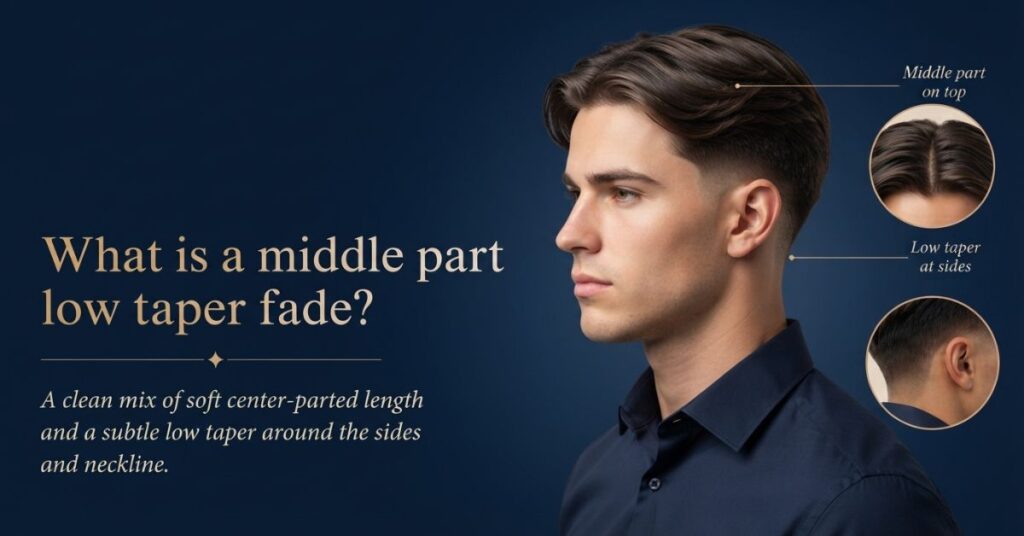
The style combines two separate ideas: a center part on top and a low taper fade on the sides.
A middle part means the top hair is split down the center rather than swept to one side. Once the top has enough length and weight, it falls outward on its own, creating the soft curtain shape this cut is known for. Style it to one side instead and you get a side part low taper fade, a related but distinctly different look.
A low taper describes where the gradual shortening begins. “Low” means the fade starts near the ears and the back of the neck, not up by the temples, so the transition stays subtle rather than dramatic.
People often use taper and fade interchangeably, but there is a real difference. A taper gradually shortens the hair without exposing much skin. A fade goes shorter still and blends closer to the skin for a crisper, more defined edge. A low taper fade borrows from both: a soft taper through the top of the sides, with a cleaner fade finish near the bottom, close to the ears and neckline.
The combined result looks neat without looking overworked, which is why it works equally well for students, office workers, and anyone who wants a current cut that does not demand daily upkeep.
Why Is the Middle Part Low Taper Fade Popular in 2026?
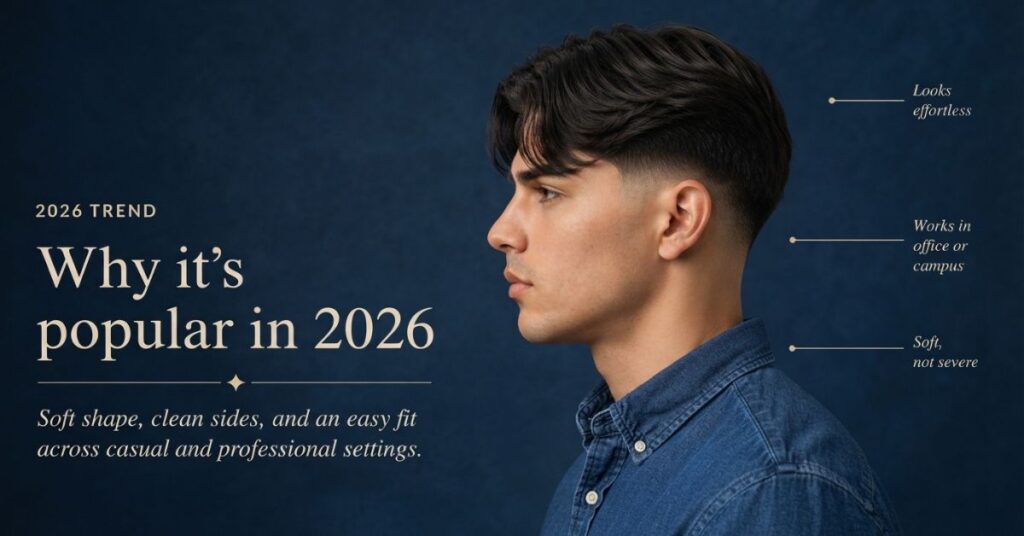
This cut has practical staying power, not just social media buzz. Among low taper fade variations, the middle part version is one of the most requested right now, largely because it reads as effortless rather than freshly cut.
The contrast between clean, short sides and a longer, flowing top adds definition without tipping into severe territory. For men who want the structure of a fade without the sharp statement of a high or skin fade, this is the comfortable middle ground.
A few grooming shifts have lined it up for a bigger moment this year:
- Workplaces have relaxed dress codes while still expecting a groomed look, and this cut delivers both.
- Men increasingly want styles that look intentional but do not eat up ten minutes of styling every morning.
- The center parted top is a callback to late nineties and early two-thousands curtain styles, but paired with a modern, clean fade instead of long, untrimmed sides.
- Because the taper sits close to natural hair growth, the whole shape stays soft, which means it holds up well across textures and face shapes.
The result is a haircut flexible enough to work in a lecture hall, an office, or a weekend outing, which is a big part of why it has become one of the defining men’s hairstyles this year.
Best Face Shapes

This cut adapts to most face shapes, though a few small adjustments help it work better for specific proportions.
- Oval: The most forgiving fit. Balanced proportions handle almost any length or volume on top without issue.
- Round: Add height and volume at the crown. A flat, pressed down middle part can widen the face further, so a little lift helps stretch the proportions.
- Square: This cut looks especially sharp here. The softer, flowing top eases a strong jawline instead of competing with it.
- Heart: Keep some width and weight at the temples rather than going fully sleek, to balance a narrower chin.
- Long or oblong: Suits a shorter top and a tighter, closer taper. Extra height on top only stretches the face further, so a flatter profile works better.
Length, volume, and exactly where th
How it looks on straight, wavy, and curly hair
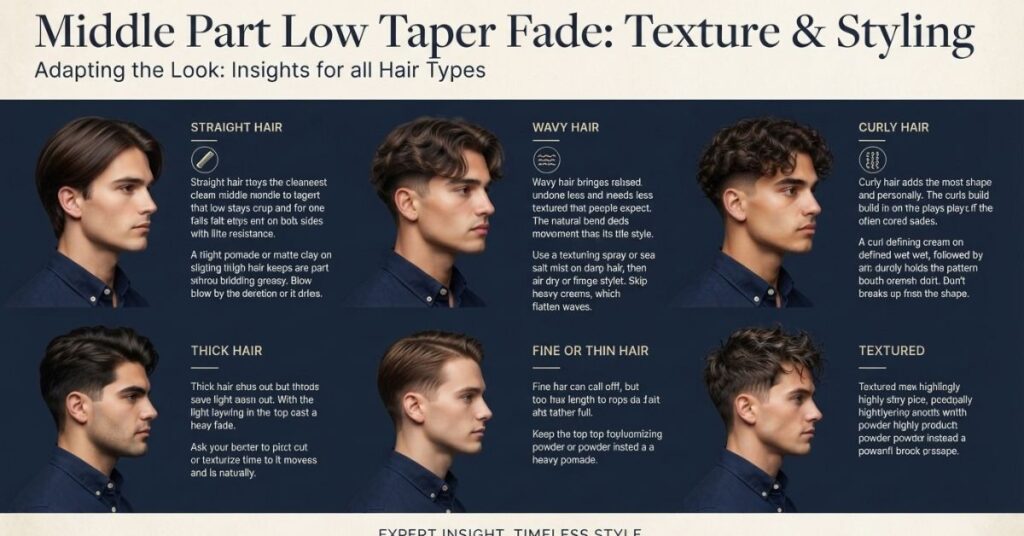
Hair texture changes both the finished look and the amount of daily effort the style needs.
Straight Hair
Straight hair produces the cleanest version of the middle part. The part line stays crisp, and the top falls flat and even on both sides with very little resistance. A light pomade or matte clay applied to slightly damp hair keeps the part sharp without looking greasy. A brief blow dry with a comb, guiding the hair in the direction you want it to fall, helps set the shape before it fully dries.
Wavy Hair
Wavy hair gives the style a relaxed, undone finish and typically needs less product than people expect. The natural bend in the hair adds movement that suits this cut particularly well. A texturizing spray or sea salt mist on damp hair, followed by air drying or finger styling, is usually enough. Heavy creams tend to flatten waves, so it is worth skipping them here.
Curly Hair
Curly hair adds the most volume and personality to this style. The curls build height and shape on top, which plays nicely against the clean, faded sides underneath. A curl defining cream applied to soaking wet hair, followed by air drying, holds the curl pattern without excess frizz. Brushing curls once they have dried breaks up the pattern, so it is best avoided.
Thick Hair
Thick hair suits this cut well but usually needs some weight removed. Without light layering or texturizing, the top can sit heavily, like a solid block rather than a shape that moves. Asking your barber to point cut or texturize the top helps it fall and move more naturally.
Fine or Thin Hair
Fine hair can carry this style, but too much length on top tends to look flat instead of full. Keeping the top in the short to medium range, and reaching for a lightweight volumizing powder or mousse rather than a heavy pomade, keeps the finished look from collapsing by midday.
Choosing the Right Top Length
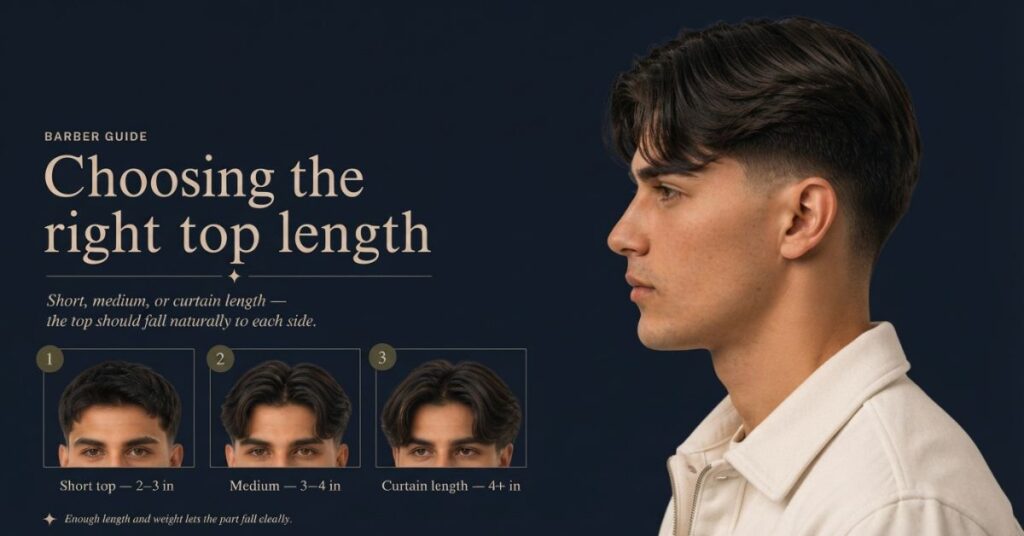
Top length is the single biggest factor in how this haircut behaves, since it decides how the part falls and whether it needs constant restyling.
| Length | Approx. Size | What You Get |
|---|---|---|
| Short | 2 to 3 inches | A subtle, low key part with minimal styling needed |
| Medium | 3 to 4 inches | The most common choice, long enough to part cleanly and add movement while staying easy to manage |
| Long | 4 inches or more | A full curtain effect with side swept movement, but it needs more frequent styling |
The general rule of thumb: the top needs enough length and weight to fall to each side on its own. Too short, and it stands up instead of lying flat. Hair density matters here too. Thicker hair can carry more length without looking heavy, while finer hair often looks best kept shorter so it does not go flat by the end of the day.
The sides should stay clean but do not need to be cut aggressively short. A low taper works best when it supports the top rather than competing with it for attention.
Read More: Mid Taper Fade Wavy Hair: Styles, Barber Guide, and Styling Tips
How to Ask Your Barber for a Middle Part Low Taper Fade
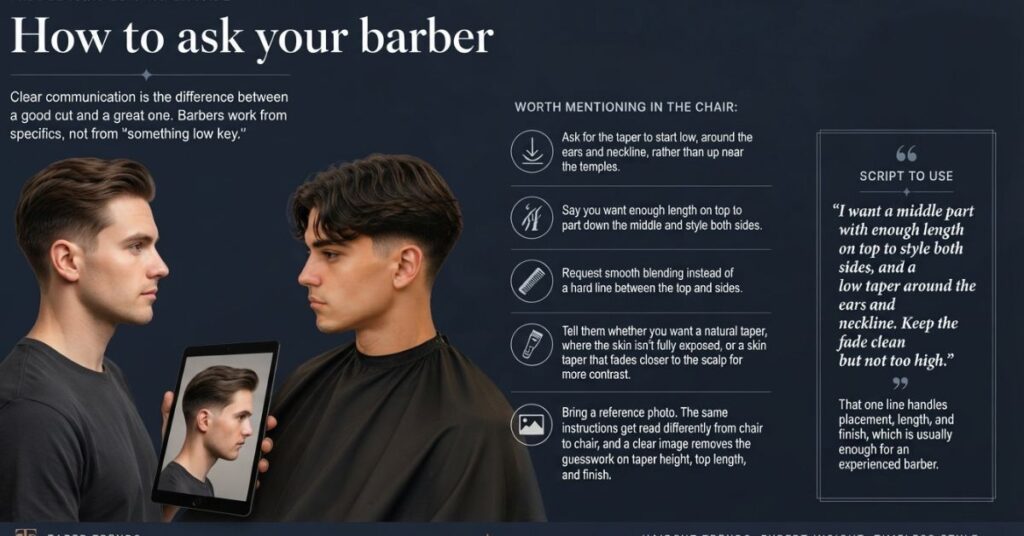
Clear communication is the difference between an average cut and a great one. Barbers work from specifics, not vague descriptions like “something low key.” A few things worth mentioning in the chair:
- Ask for the taper to start low, around the ears and neckline, rather than up near the temples.
- Specify a guard number if you have one in mind. A number one or two guard at the shortest point is a safe, versatile starting choice.
- Say clearly that you want enough length on top to part down the middle and style both sides evenly.
- Request smooth, gradual blending rather than a hard visible line between the top and the sides.
- Clarify whether you want a natural taper, which keeps some coverage, or a skin taper that fades closer to the scalp for more contrast.
- Bring a reference photo. The exact same verbal instructions can be interpreted differently from one barber to the next.
A simple line that covers most of this in one go:
“I want a middle part with enough length on top to style both sides, and a low taper around the ears and neckline. Keep the fade clean but not too high.”
That single sentence handles placement, length, and finish, which is usually enough for an experienced barber to work from.
Low taper vs mid taper fade

These two cuts get confused often, but the difference comes down to where the fade starts and how much contrast it creates.
| Low Taper | Mid Taper | |
|---|---|---|
| Fade starts | Near the ears and neckline | Around the middle of the sides |
| Contrast | Soft, gradual transition | Sharper, more structured look |
| Overall feel | Relaxed and low key | Polished and more deliberate |
| Best for | School, everyday wear | Office settings, trend forward contrast |
If you are new to fades, the low taper is the easier starting point. It is more forgiving as it grows out, needs fewer touch ups, and avoids the stark visible line that a mid or high fade shows after just a couple of weeks.
Styling Products That Work

The right product depends less on the cut itself and more on your hair type and the finish you are after.
- Lightweight cream: Gives a natural, flowy look. Best for wavy or normal density hair that needs control without stiffness.
- Sea salt spray: Adds texture and a tousled finish, especially useful on wavy or straight hair that needs a bit of grip and movement.
- Matte clay: Provides hold without shine, keeping the part in place through the day without a wet look.
- Water based pomade: Creates a cleaner, more defined part line, separating strands without going stiff or plastic looking.
- Mousse: Adds volume for fine or thin hair, and lift for curls without weighing them down.
If your hair is fine or thin, heavy, greasy products are worth avoiding entirely. They drag the top down and collapse the part. A small amount, spread evenly, almost always beats using too much.
How to Style a Middle Part Low Taper Fade at Home
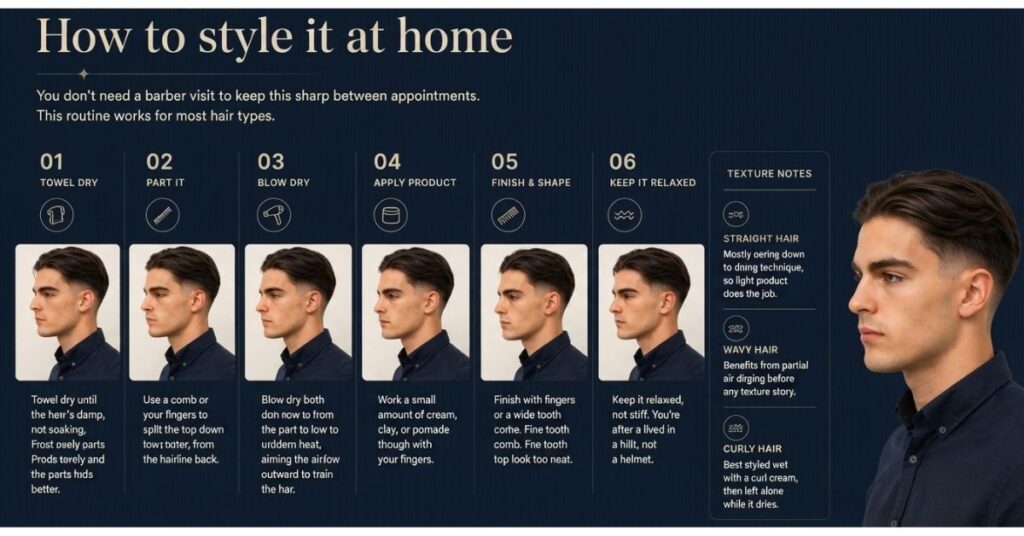
You do not need a barbershop visit every time to keep this cut looking sharp. This routine works for most hair types between appointments.
- Towel dry until the hair is damp, not soaking wet. Product spreads more evenly this way, and the part holds better once it dries.
- Use a comb or your fingers to split the top down the center, working from the hairline back.
- Blow dry both sides away from the part on low to medium heat, aiming the airflow outward to train the hair in the direction you want.
- Work a small amount of cream, clay, or pomade through with your fingers, focusing on the mid lengths and ends.
- Finish with your fingers or a wide tooth comb. Fine tooth combs tend to make the top look overly neat and stiff.
- Keep the overall finish relaxed rather than stiff. The goal is a lived in look, not a fixed, helmet like shape.
A few texture specific notes are worth keeping in mind. Straight hair mostly comes down to drying technique, so light product is usually enough. Wavy hair benefits from partial air drying before adding any texture spray. Curly hair is best styled while still wet with a curl cream, then left alone to dry undisturbed.
Read More : Low Taper vs Low Fade: What’s the Difference, and Which Should You Choose?
How Often Should You Maintain It?
Regular upkeep is what keeps this cut looking sharp instead of gradually turning shapeless.
Plan on a taper touch up every 2 to 4 weeks, depending on how quickly your hair grows. Because the fade sits low, it grows out somewhat more gracefully than a higher fade, but it still needs consistent attention to stay defined. The top typically needs a trim every 6 to 8 weeks, so the length stays consistent and the part continues to fall correctly.
The neckline and sideburns grow out noticeably between full appointments and are worth a quick touch up on their own, even if you are stretching the time between full cuts. Skip the upkeep for too long, and the line between the taper and the top starts to blur, making the whole shape look accidental rather than intentional. A quick trim of stray neckline hairs at home, combined with steady daily styling, keeps things holding together until your next barbershop visit.
Middle Part Low Taper Fade Variations to Try
This is not a single fixed look. Small changes in length, texture, and finish open up several directions depending on your hair type and how much daily effort you want to put in.
Classic Middle Part
A clean, even part with moderate top length. Suits straight to slightly wavy hair and works well across school, work, and casual settings without much daily effort.
Textured Middle Part
A choppy, piece-y top for a more lived in, less polished feel. Adds personality without changing the underlying shape of the cut.
Curly Top
Lets natural curls take over on top while the sides stay clean and faded. This is the boldest version of the style, with the curls doing most of the visual work.
Wavy Curtain
Runs the top slightly longer with visible wave movement, creating a fuller curtain effect. Works especially well on hair that naturally holds its shape throughout the day.
Longer Fringe
Adds extra length at the front for a softer, face framing effect. Particularly flattering on round or square face shapes, where the added length balances stronger features.
Subtle Skin Finish
Swaps the natural taper for a closer, skin level fade near the ears and neckline. Keeps the same soft top but adds sharper contrast underneath for a slightly more polished, deliberate finish.
Frequently Asked Questions
Does a middle part low taper fade work with thick hair?
Yes, though thick hair usually needs some weight removed through point cutting or texturizing so the top moves naturally instead of sitting heavily.
How long does it take to grow out enough for a middle part?
Most hair types need around 3 to 4 inches on top, which typically takes two to four months of growth from a shorter starting length.
Is this cut high maintenance?
No. It needs a taper touch up every 2 to 4 weeks and a top trim every 6 to 8 weeks, which is less frequent than higher contrast fades.
Can I get a middle part low taper fade with curly hair?
Yes. Curly hair actually adds volume and shape on top, which pairs well with the clean, faded sides, though curls may need slightly extra length to account for shrinkage.
What is the difference between a taper and a fade?
A taper gradually shortens hair without exposing much skin, while a fade blends closer to the skin for a sharper, more defined edge.
Do I need daily styling product?
Most hair types only need a small amount of lightweight product, such as cream, clay, or a texturizing spray, rather than heavy daily styling.
Read More : Mid Taper Fade Fluffy Fringe Hair: What It Is, Styles, and How to Ask for It
Final Thoughts
The middle part low taper fade earns its popularity by being genuinely easy to live with. It looks intentional without demanding a strict routine, adapts to straight, wavy, and curly hair, and flatters most face shapes with only minor adjustments. Bring a clear description or a reference photo to your next barber appointment, keep up with a taper touch up every few weeks, and this cut will stay sharp with very little daily effort.

