

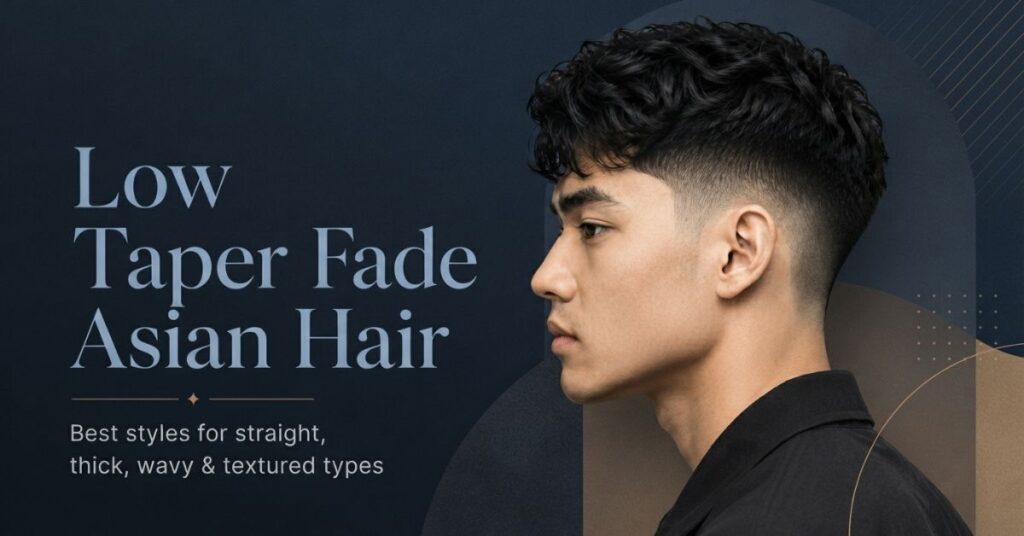
A Low taper fade Asian hair has become one of the most requested haircuts for Asian men, and it’s easy to see why. It keeps the sides and back clean without exposing too much scalp, works with almost any face shape, and grows out gracefully instead of turning patchy after two weeks. But Asian hair isn’t one texture. Straight, thick, wavy, and coarse strands all behave differently under the clippers, so the “low taper fade” you see in a photo needs real adjustments before it looks right on your head.
This guide breaks down what a low taper fade actually is, why it works so well with Low taper fade Asian hair density, and how to choose the right top style for your texture and face shape. You’ll also get a barber script you can use at your next appointment and a realistic maintenance schedule.
What is a Low taper fade Asian hair?
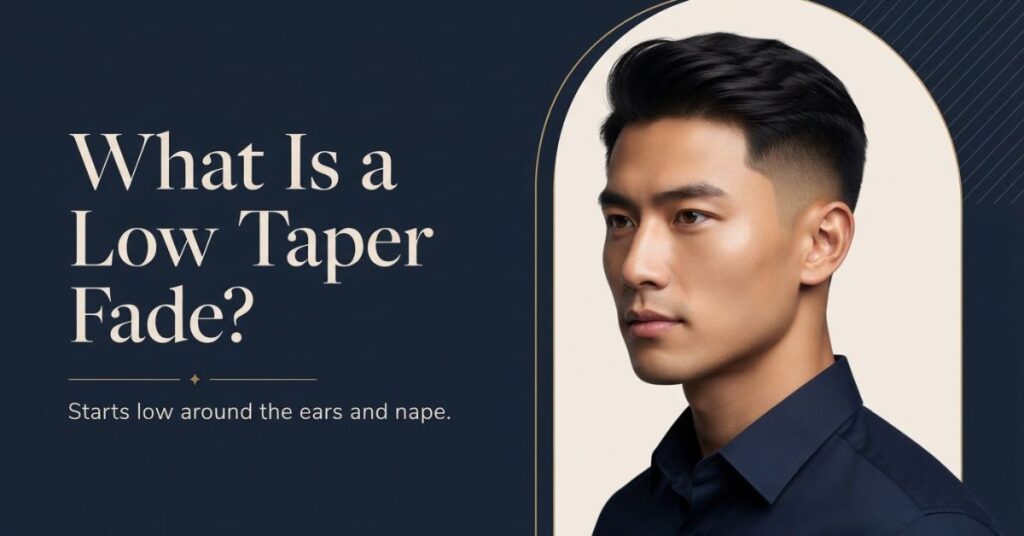
A low taper fade is a haircut where the hair gradually shortens as it moves down toward the skin, with the fade starting just above the ears and around the nape of the neck. The rest of the sides and back stay close to their natural length, and the top is left longer for styling.
Because the fade line sits low on the head, it creates a soft, barely noticeable transition rather than a sharp contrast. This makes it one of the more forgiving fades to grow out, and one of the easiest to keep looking sharp between visits to the barber.
For the low taper fade Asian specifically, the low taper fade is popular because it balances the sides without fighting the natural thickness and straightness of the hair up top. Instead of leaving a blocky, helmet-like shape, it tapers the weight down so the top hair can move, flip, or sit flat depending on how you style it.
Low taper vs mid vs high fade
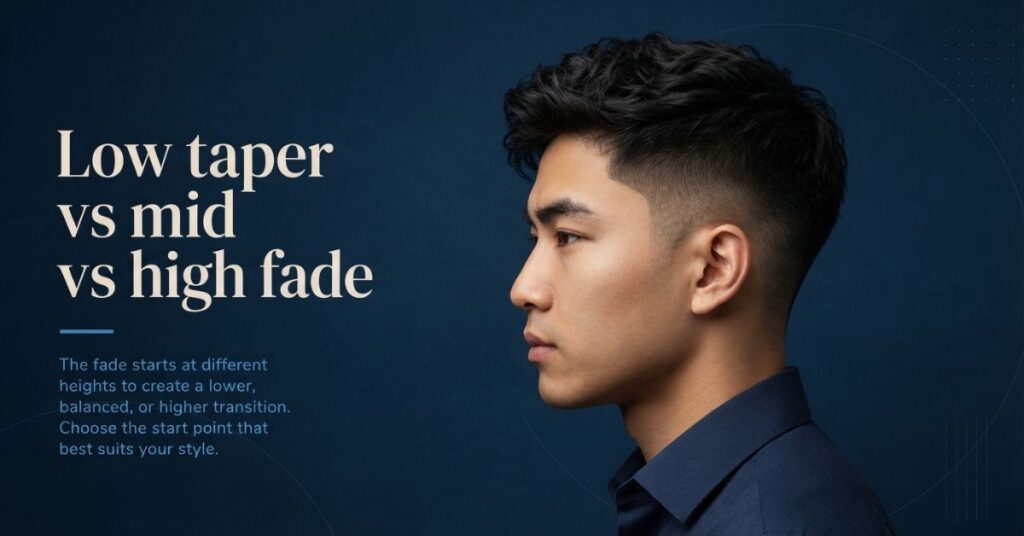
The difference between these three fades comes down to where the fade begins on the head.
- Low taper fade: starts just above the ears and around the nape, staying subtle and close to natural length elsewhere.
- Mid fade: starts around the temple area, roughly halfway up the side of the head, offering a bit more contrast than a low fade.
- High fade: starts near the top of the head, close to the crown, creating the boldest contrast between short sides and longer top.
For most Low taper fade Asian hair types, a low or mid fade is easier to maintain and less likely to expose an awkward density gap between the fade and the top hair. High fades can look striking, but they demand more frequent trims to stay clean.
Why the technique suits Low taper fade Asian density and texture
Asian hair tends to grow in a distinct pattern that affects how any fade behaves. On average, Asian hair has a higher density per square centimeter than many other hair types, often cited around 150 to 200 strands per square centimeter, compared with roughly 100 to 150 for Caucasian hair. The individual strands are also frequently thicker in diameter and grow with a straighter natural pattern.
That combination, more strands packed closer together plus straighter growth, means the hair sits with more visible bulk. A fade that starts too high can create a harsh “shelf” where the dense top hair suddenly meets very short sides. A low taper avoids that problem by keeping more length intact and letting the barber blend the weight gradually instead of cutting it off abruptly.
This is also why barbers often use wider guard transitions and scissor texturizing on Asian hair rather than jumping straight from a skin fade to a thick, untouched top. The goal is a smooth gradient, not a hard line.
Read More : Low Taper vs Low Fade: What’s the Difference, and Which Should You Choose?
Best Low taper fade Asian styles for straight and thick hair
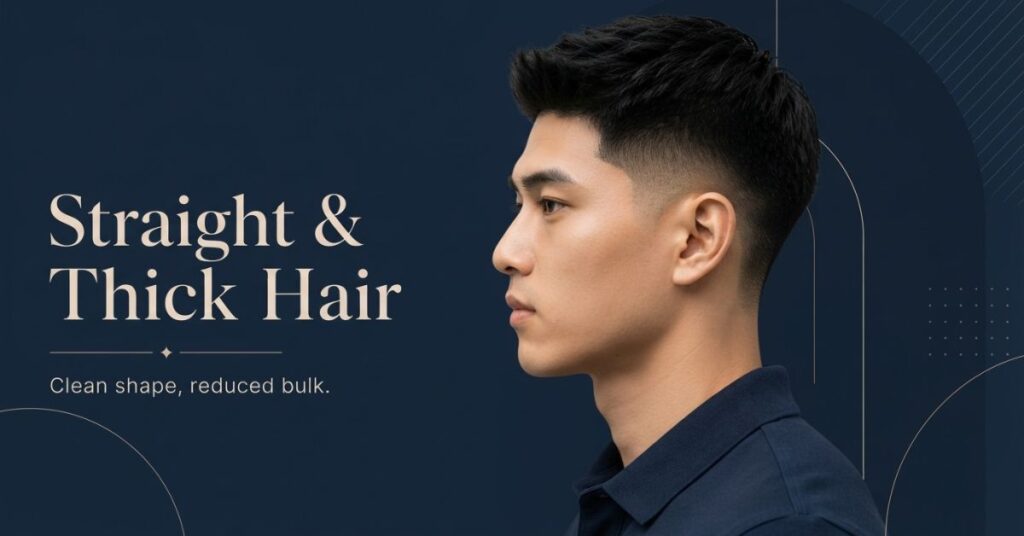
Straight, thick Low taper fade Asian hair holds shape well and looks especially clean with a low taper because the fade gives the eye a defined edge while the top stays soft and full.
Some of the most reliable combinations include:
- Textured fringe with low taper: short layers cut into the fringe reduce bulk and let it fall naturally over the forehead instead of standing straight up.
- Side part with low taper: a classic, professional option that works well for straight hair since it holds a part line without much product.
- Slick back with low taper: requires a strong pomade or clay to control straight, thick strands, but gives a polished, put together look.
- Two-block haircut: longer, disconnected top paired with a low fade underneath, popular in Korean-influenced styles.
- Comma hair: a soft, curved fringe style that has become popular for its natural, effortless movement.
Because thick hair carries more visible weight, most barbers will thin the top with texturizing shears even if you’re keeping the length. Skipping this step is the most common reason a low taper fade looks blocky instead of styled.
How the cut works on wavy and textured Asian hair
Wavy and coarser texturedLow taper fade Asian reacts differently to a fade than straight hair does. Waves and texture create natural volume, which means the hair can look fuller or even puffier once the sides are shortened.
A few adjustments make the cut work better on this texture:
- Slower, more gradual blending between guard lengths prevents the fade from ballooning outward as it meets the textured top.
- Leaving slightly more length on top helps the natural wave pattern settle into loose curls or texture instead of frizzing upward.
- Scissor over comb techniques near the fade line soften the transition so the wave pattern isn’t cut off abruptly.
- Lightweight styling products, like a matte clay or texture powder, enhance the wave pattern without weighing it down.
Wavy and textured hair actually gives you more versatility with a low taper fade because the natural movement does some of the styling work for you. A textured crop or messy top style tends to look especially natural on this hair type.
Choosing a style for your face shape
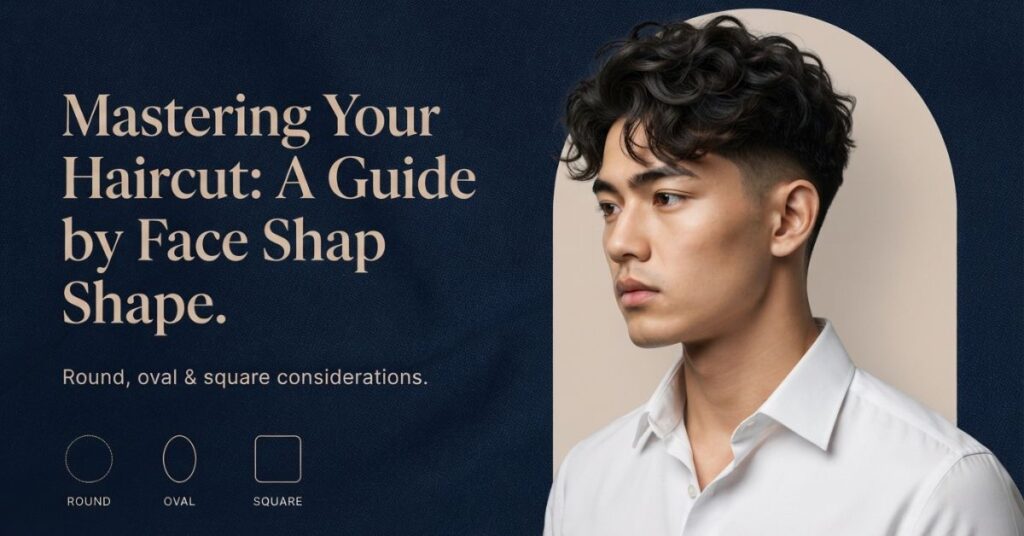
The top style you pair with your low taper fade should work with your face shape, not against it.
- Round face: styles with height on top, like a textured quiff or spiky fringe, help elongate the face. Avoid keeping the sides too full, since that adds width.
- Square face: softer, textured styles with some fringe movement balance out strong jawlines without competing with them.
- Oval face: considered the most versatile shape, oval faces suit almost any low taper combination, including side parts, slick backs, and fringes.
- Long face: styles with more width and less height, like a side swept fringe or a textured crop with volume on the sides, help balance longer proportions.
- Diamond face: a soft fringe or textured top that covers part of the forehead softens angular cheekbones.
If you’re unsure which category you fall into, bring a few reference photos to your barber. A good barber will adjust the length and texturizing on top based on your bone structure, not just copy the photo exactly.
Low taper vs mid taper: which should you pick?
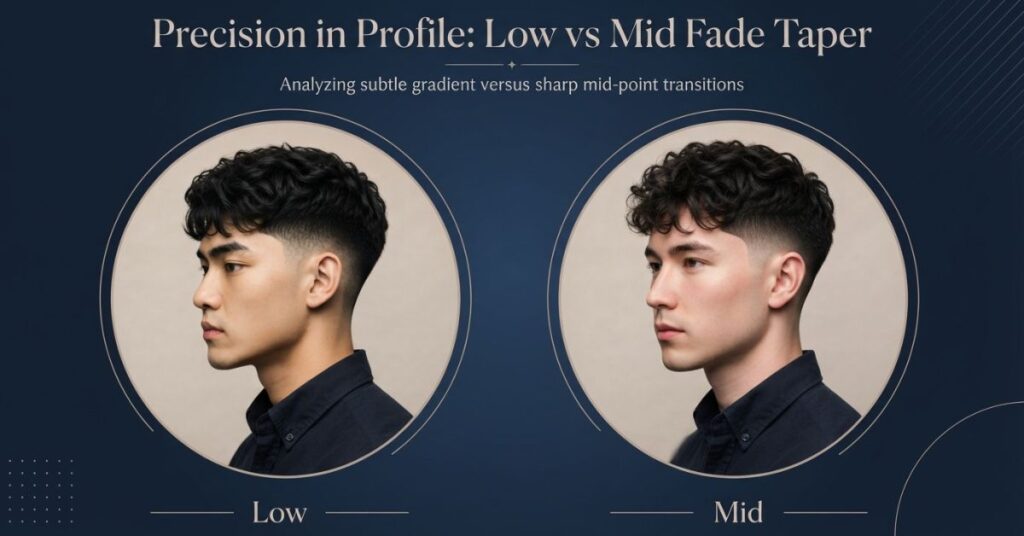
Both fades are popular for Asian hair, and the right choice usually comes down to how much contrast you want and how often you’re willing to get trims.
| Factor | Low taper fade | Mid taper fade |
|---|---|---|
| Fade start point | Above ears, at the nape | Around the temple |
| Contrast level | Subtle | Moderate |
| Maintenance frequency | Every 4 to 6 weeks | Every 3 to 5 weeks |
| Best for | Professional settings, low maintenance | Bolder, more modern looks |
| Grows out | Very gracefully | Noticeable within 2 to 3 weeks |
If you want a cut that still looks intentional a month after your last appointment, the low taper is the safer choice. If you want more visible definition and don’t mind more frequent barber visits, a mid taper adds that extra edge.
How to ask your barber for a Low taper fade Asian
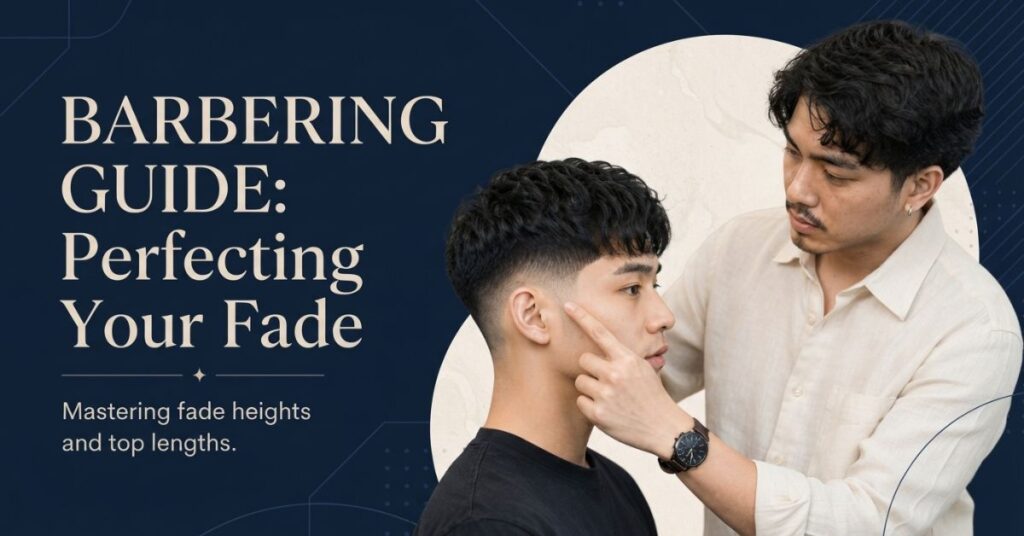
Clear communication makes the difference between a fade that fits your hair and one that fights it. Use this approach at your next appointment.
- Name the fade specifically. Say “low taper fade” rather than just “fade,” since barbers use different starting points for each level.
- Describe your hair texture honestly. Mention if your hair is thick, fine, straight, wavy, or coarse so the barber adjusts the guard transitions accordingly.
- Point to where you want the fade to start. Show them just above your ear and around the nape as the starting line.
- Ask for texturizing on top, especially if your hair is thick, so the top doesn’t sit like a solid block once it’s cut.
- Bring photos from multiple angles. A single front facing photo doesn’t show the back or side blending clearly enough.
- Mention your styling routine. Telling your barber whether you’ll use a blow dryer, straightener, or air dry helps them cut the top to work with how you’ll actually style it.
A short, specific request like this saves time and avoids the awkward back and forth that happens when a barber has to guess what you mean by “not too short.”
Read More : Mid Taper Fade Fluffy Fringe Hair: What It Is, Styles, and How to Ask for It
How to style the top: fringe, quiff, or textured crop
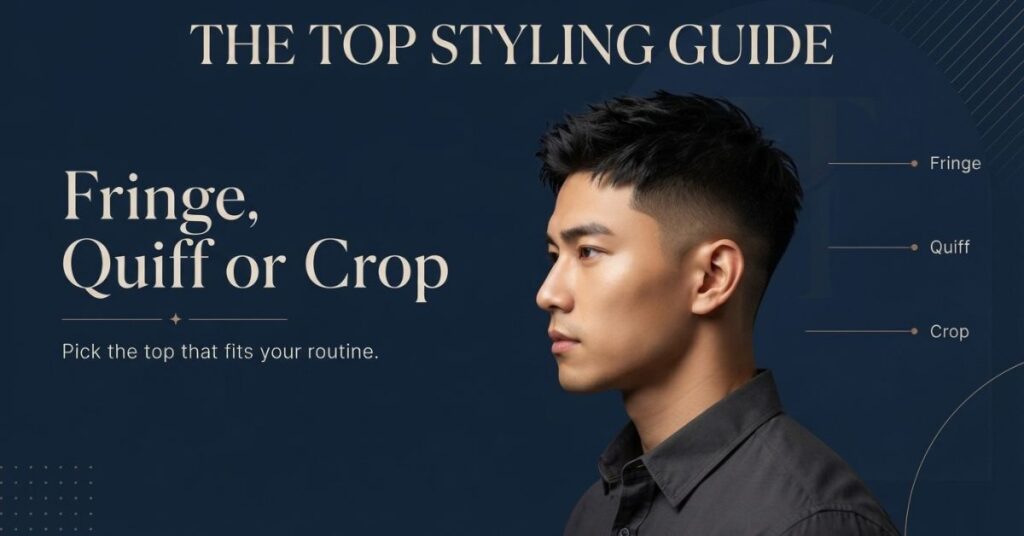
Once the fade is done, the top is where you get to express your own style. Three options consistently pair well with a low taper fade on Asian hair.
Fringe
A fringe brings the top hair forward over the forehead, either straight across or slightly textured and piece-y. It suits straight hair especially well since the natural growth pattern helps it stay in place with minimal product. A light wax or clay is usually enough to define the ends without flattening the volume.
Quiff
A quiff lifts the front section of hair upward and slightly back, creating height and a more polished, put together appearance. This style works well for round or long faces because the height changes the visual proportion of the face. It typically needs a stronger hold product and a blow dryer to set the lift.
Textured crop
A textured crop keeps the top relatively short with choppy, layered pieces styled forward or upward for a lived in, low effort look. It’s a strong option for wavy or coarser hair because the natural texture does most of the styling work. A matte paste or texture powder brings out definition without added shine.
How often to maintain a low taper fade
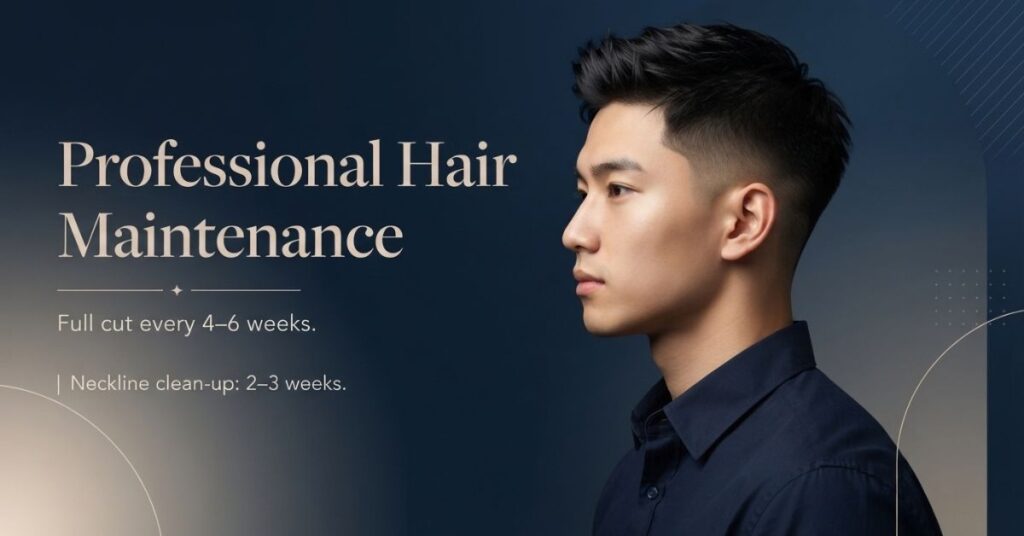
A low taper fade is one of the lower maintenance fade options, but it still needs regular upkeep to stay sharp.
- Full trim: every 4 to 6 weeks for most hair types, since the low starting point grows out slowly and evenly.
- Neckline and edge cleanup: many men book a quick neckline trim around the 2 to 3 week mark to keep the fade line crisp.
- Daily care: washing with a moisturizing shampoo two to three times a week helps prevent the dryness that clippers can cause near the fade line.
- Product routine: a small amount of clay, paste, or pomade applied to damp or dry hair keeps the top styled without buildup that can make thick or wavy hair look greasy.
If your hair grows fast or you keep a mid taper instead of a low one, you may need to shorten this schedule by a week or two.
Read More :Mid Taper Fade Edgar: Styles, Barber Guide & Maintenance
Final takeaways
- A low taper fade starts just above the ears and at the nape, giving a subtle, professional finish that suits most face shapes.
- Asian hair’s higher density and straighter growth pattern make a low taper especially practical, since it avoids the harsh density gap a high fade can create.
- Straight, thick hair pairs well with textured fringes, side parts, and slick backs, while wavy or textured hair benefits from slower blending and lightweight products.
- Choosing between a low and mid taper comes down to how much contrast you want versus how often you’re willing to visit the barber.
- Clear communication, specific wording, texture details, and reference photos, leads to a far better result than a single photo alone.
Frequently asked questions
Does a Low taper fade Asian work on thick Asian hair?
Yes. A low taper is often the best choice for thick hair because it removes bulk gradually instead of creating a sudden density gap near the fade line.
How long should I let my hair grow before getting a low taper fade?
Most barbers recommend at least 2 to 3 inches on top so there’s enough length to texturize and style into a fringe, quiff, or crop.
Can wavy or curly Asian hair get a low taper fade?
Absolutely. Wavy and textured hair actually adds natural movement to the style, though the blend near the fade line usually needs to be done more gradually.
How much does a Low taper fade Asian cost?
Prices vary by location and barber experience, typically ranging from 20 to 60 dollars, with skin fades and detailed texturizing often costing more than a standard trim.
Will a low taper fade suit my face shape?
Most face shapes work with a low taper since the fade itself stays subtle. The top style, fringe, quiff, or crop, is what should be adjusted based on your face shape.
How is a low taper fade different from a skin fade?
A low taper fade blends down to a very short length without necessarily reaching bare skin, while a skin fade tapers all the way down to the skin at the fade’s lowest point.

